n. · a glossary entry from the working vocabulary.
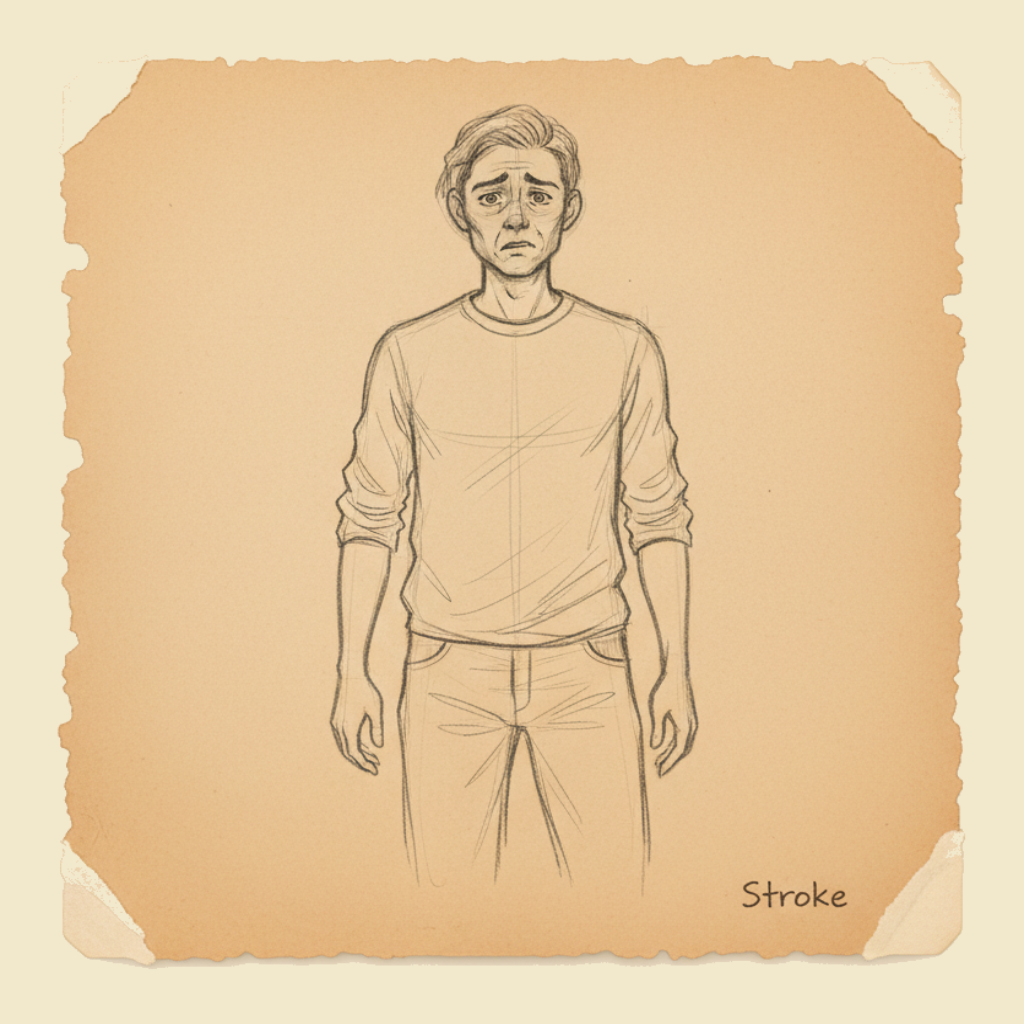
Stroke.
§ short definition
A sudden interruption of blood supply to part of the brain, killing brain cells within minutes — a time-critical medical emergency.
§ long definition
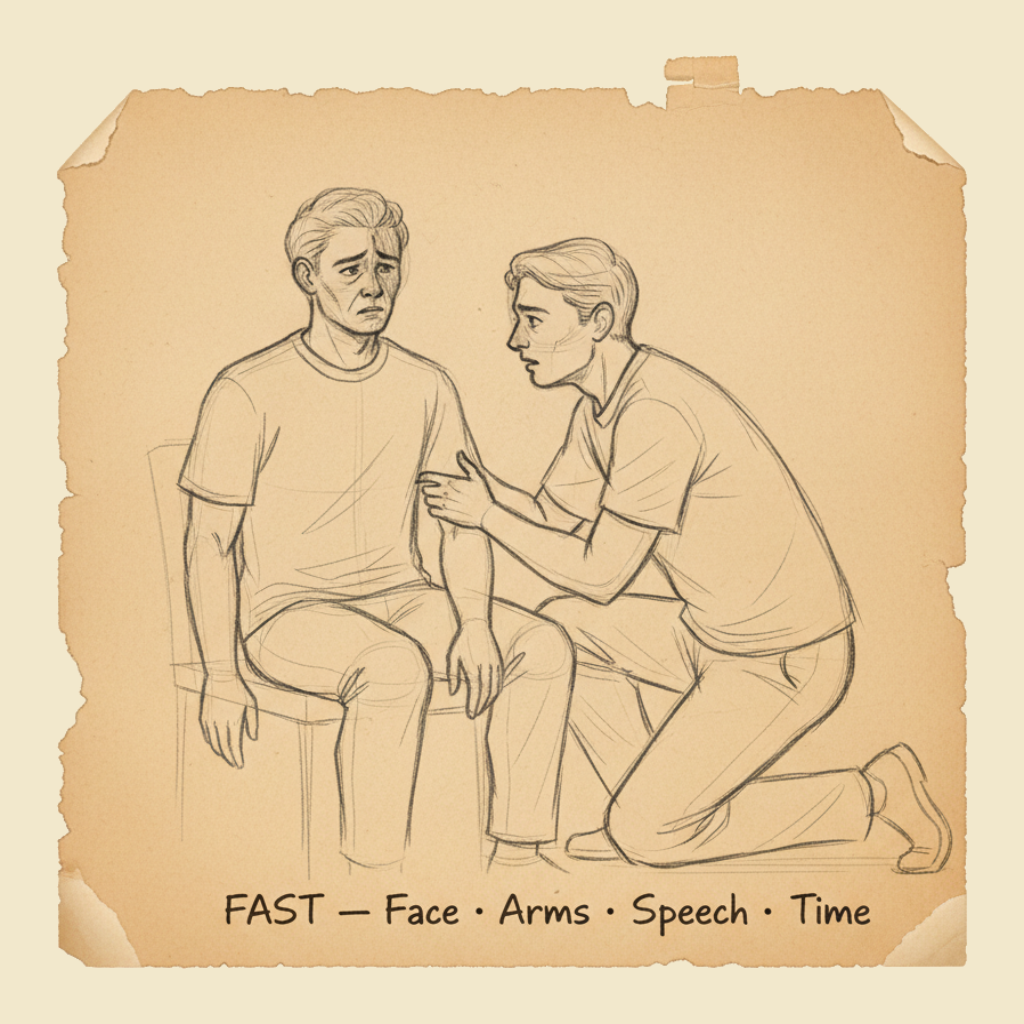
A stroke is a "brain attack". Part of the brain suddenly loses its blood supply, the cells in that area start to die within minutes, and the functions controlled by that part of the brain — speech, movement, vision, balance, swallowing — stop working. There are two mechanisms. Ischaemic strokes (the majority) are caused by a clot blocking a brain artery. Haemorrhagic strokes are caused by a brain artery bursting and bleeding into the surrounding tissue. The first aid is the same for both, because the first aider has no way of telling them apart in the field — and that doesn't matter, because both are emergencies and both are treated in hospital.
Recognition is built around the F.A.S.T. mnemonic, which is the single most useful tool the first aider has:
- F — Face. Ask the casualty to smile. Does one side of the mouth or face droop?
- A — Arms. Ask them to raise both arms. Does one drift down or fail to lift at all?
- S — Speech. Ask them to repeat a simple sentence. Is their speech slurred, jumbled, or absent?
- T — Time. If any of the above are present, call an ambulance immediately and note the time the symptoms started. Treatment options shrink fast — within hours — and the time of onset decides what the hospital can do.
Other signs include sudden severe headache, sudden vision loss in one or both eyes, sudden dizziness or loss of balance, and sudden numbness or weakness on one side of the body. Some people have a transient episode (a "TIA" or mini-stroke) where the symptoms resolve completely within minutes — this is still a medical emergency, because a real stroke often follows.
First aid: call an ambulance, lay the casualty down with the head slightly raised, do not give them anything to eat or drink (their swallow may be affected and they could choke), reassure them, and monitor their breathing and responsiveness. Never wait to see if it gets better — every minute matters.
§ ANZCOR reference
9.2.2