n. · a glossary entry from the working vocabulary.
Spinal injury.
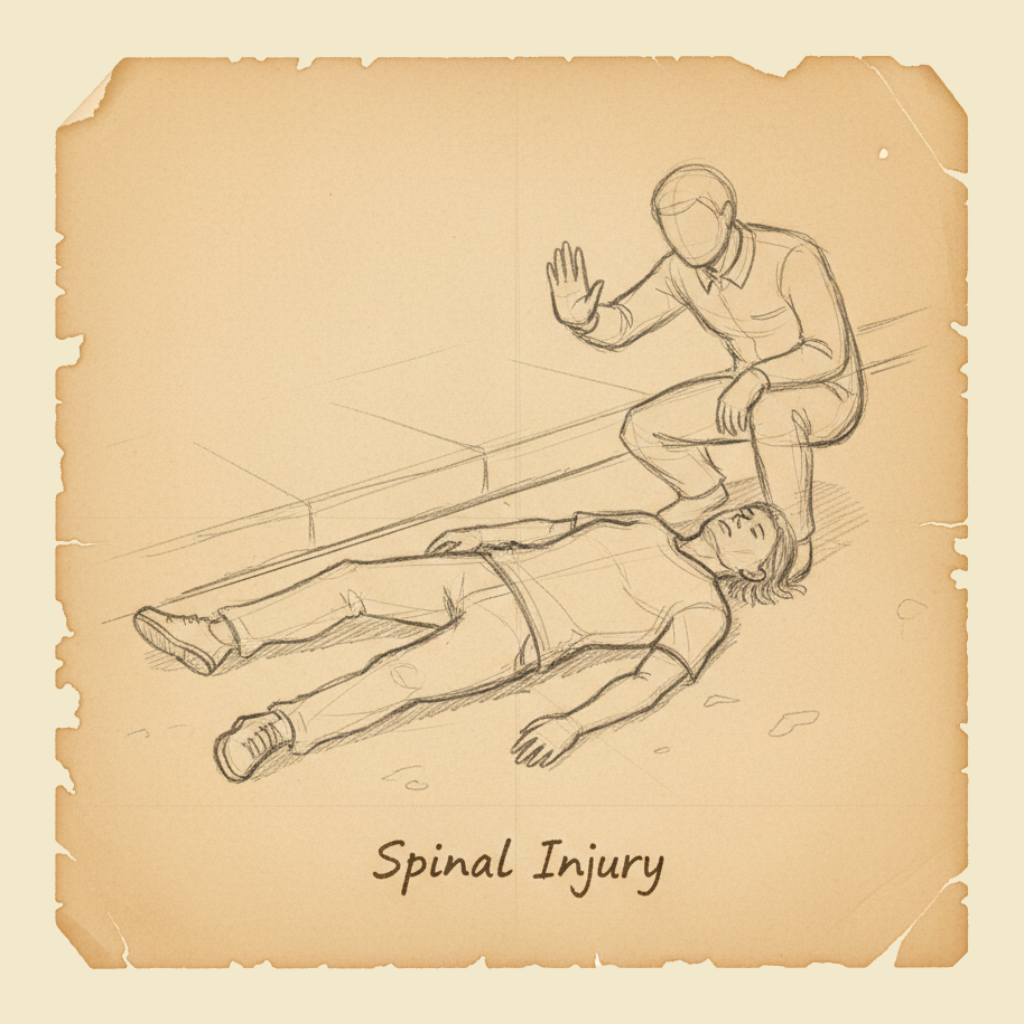
§ short definition
Damage to the bones, ligaments or spinal cord of the neck or back — serious because incorrect movement can turn a partial injury into paralysis.
§ long definition
A spinal injury is damage to any part of the spine — the bones (vertebrae), the ligaments holding them together, the discs between them, or the spinal cord running through them. The thing that makes spinal injury different from any other fracture is the cord: it carries every nerve signal between the brain and the body, and once it is damaged that damage is permanent. The first aider's job is to stop the injury from getting worse while the ambulance is on its way.
You suspect a spinal injury after any high-energy mechanism: a fall from height, a vehicle collision, a motorbike or pushbike crash, a rugby tackle gone wrong, a dive into shallow water, any significant blow to the head, any unconscious casualty whose injury history you don't know. The signs in a conscious casualty are pain or tenderness in the neck or back, weakness or loss of feeling in the arms or legs, pins and needles, an inability to move a limb, or in serious cases loss of bladder or bowel control.
First aid: tell the casualty not to move and reassure them. If they are conscious and breathing normally, leave them in the position you found them in. Support the head and neck gently with your hands in the position they are already in — do not pull, do not straighten, do not turn. Keep them warm. Call an ambulance. If you have to move them — because they are not breathing, or because the scene is unsafe, or to put an unresponsive casualty into the recovery position — keep the head, neck and back in alignment as a single rigid unit. The recovery position takes priority over a possible spinal injury: an unmaintained airway will kill the casualty in minutes; a slightly mishandled spine may not.
§ ANZCOR reference
9.1.6