n. · a glossary entry from the working vocabulary.
Shock.
§ short definition
A life-threatening failure of the circulation, where not enough blood is reaching the body's organs to keep them working.
§ long definition
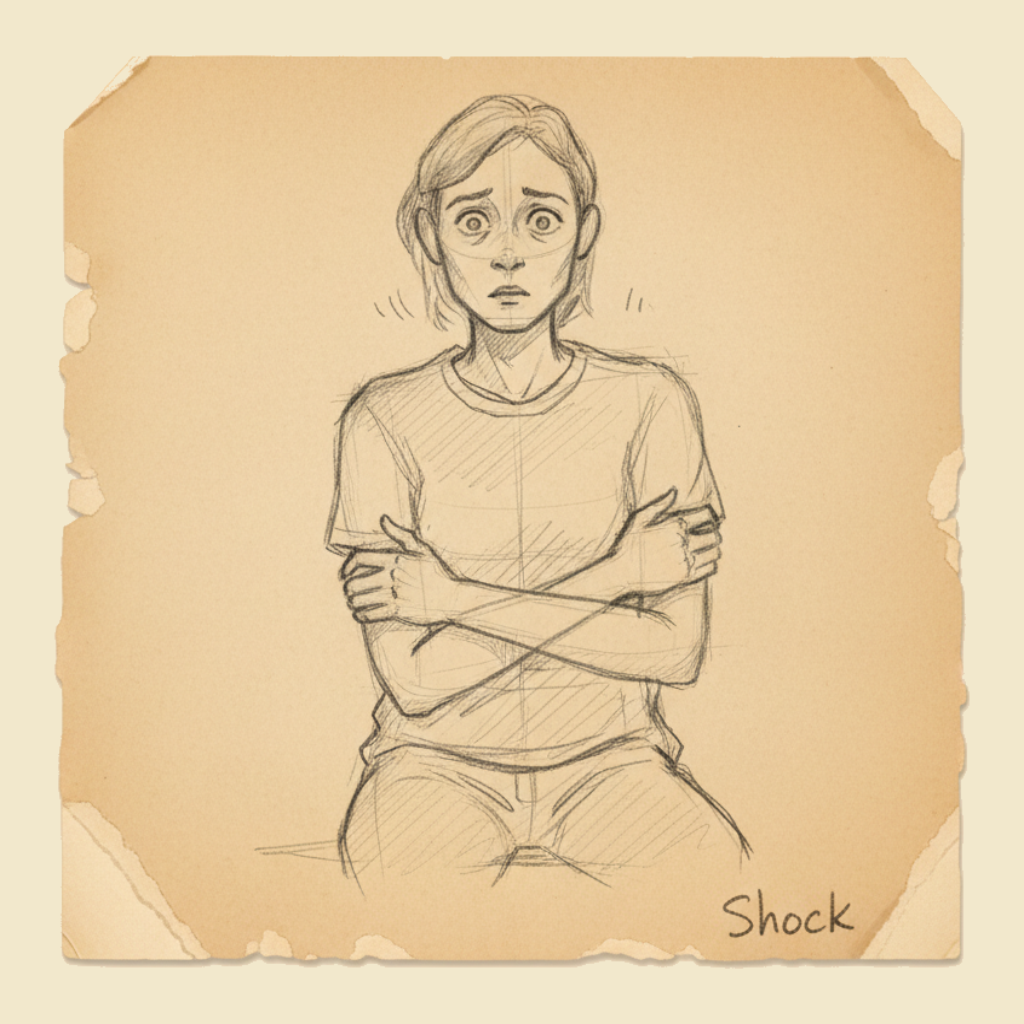
In first aid, shock does not mean "upset" or "frightened" — it is a precise medical word for the state where the circulation has stopped delivering enough oxygen-carrying blood to the tissues. Cells start to fail, organs start to fail, and without treatment the casualty will die. Shock is always a sign that something bigger is going wrong, and the first aider's job is to recognise it, treat what they can, and get the casualty to hospital fast.
The common causes split into four categories. Hypovolaemic shock is the most familiar — not enough blood, usually from heavy bleeding (internal or external) or massive fluid loss from burns, vomiting or diarrhoea. Cardiogenic shock is the heart failing as a pump, often from a heart attack. Distributive shock is the blood vessels suddenly becoming too leaky or too dilated to maintain pressure — anaphylaxis, severe infection (sepsis), spinal cord injury. Obstructive shock is something physically blocking the circulation, such as a tension pneumothorax or a major clot.
The signs are the same regardless of cause, and they go in a consistent order: pale, cold, clammy skin (the body shutting down blood flow to the surface to protect the core), a fast and weak pulse, fast shallow breathing, thirst, restlessness or anxiety, nausea, weakness, eventually drowsiness, confusion, and collapse.
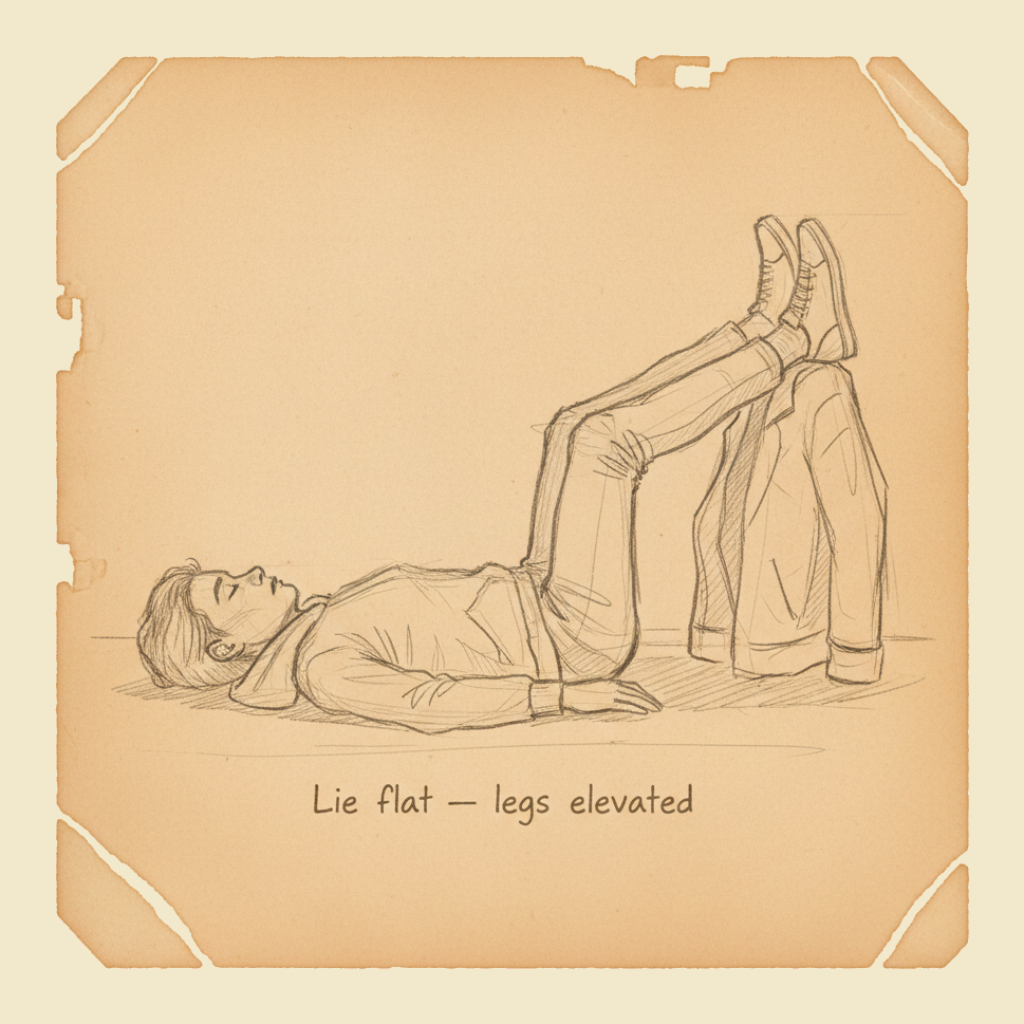
First aid: call an ambulance immediately, and then treat whatever is causing it — control bleeding, treat anaphylaxis with adrenaline, cool burns, treat the underlying problem. Lay the casualty down. If there is no spinal injury, raising the legs slightly may help. Keep them warm with a blanket — but do not apply direct heat. Reassure them. Do not give anything to eat or drink, even though they will be thirsty: shocked casualties often end up needing surgery and an empty stomach matters. Monitor breathing and be ready to start CPR if they deteriorate.
§ ANZCOR reference
9.2.3