n. · a glossary entry from the working vocabulary.
Seizure.
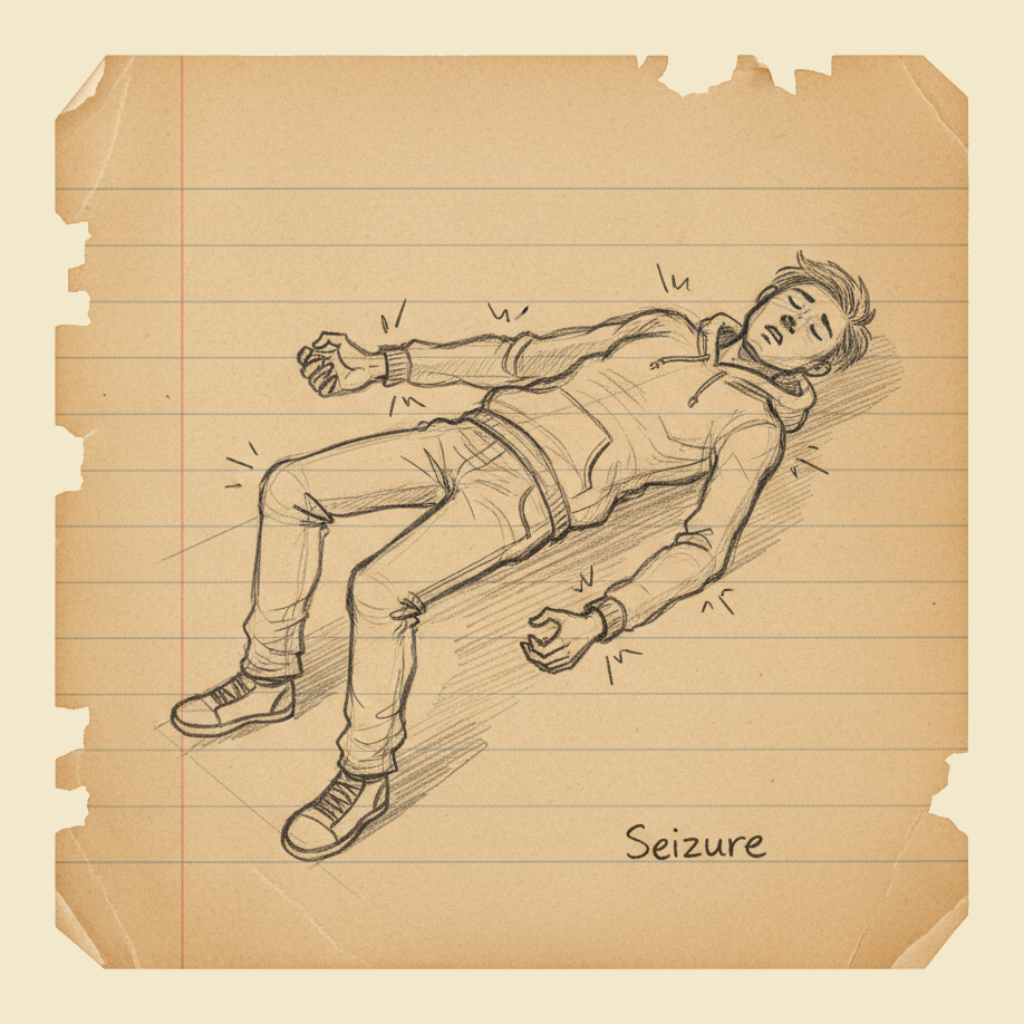
§ short definition
A burst of abnormal electrical activity in the brain that briefly disrupts movement, awareness, or both.
§ long definition
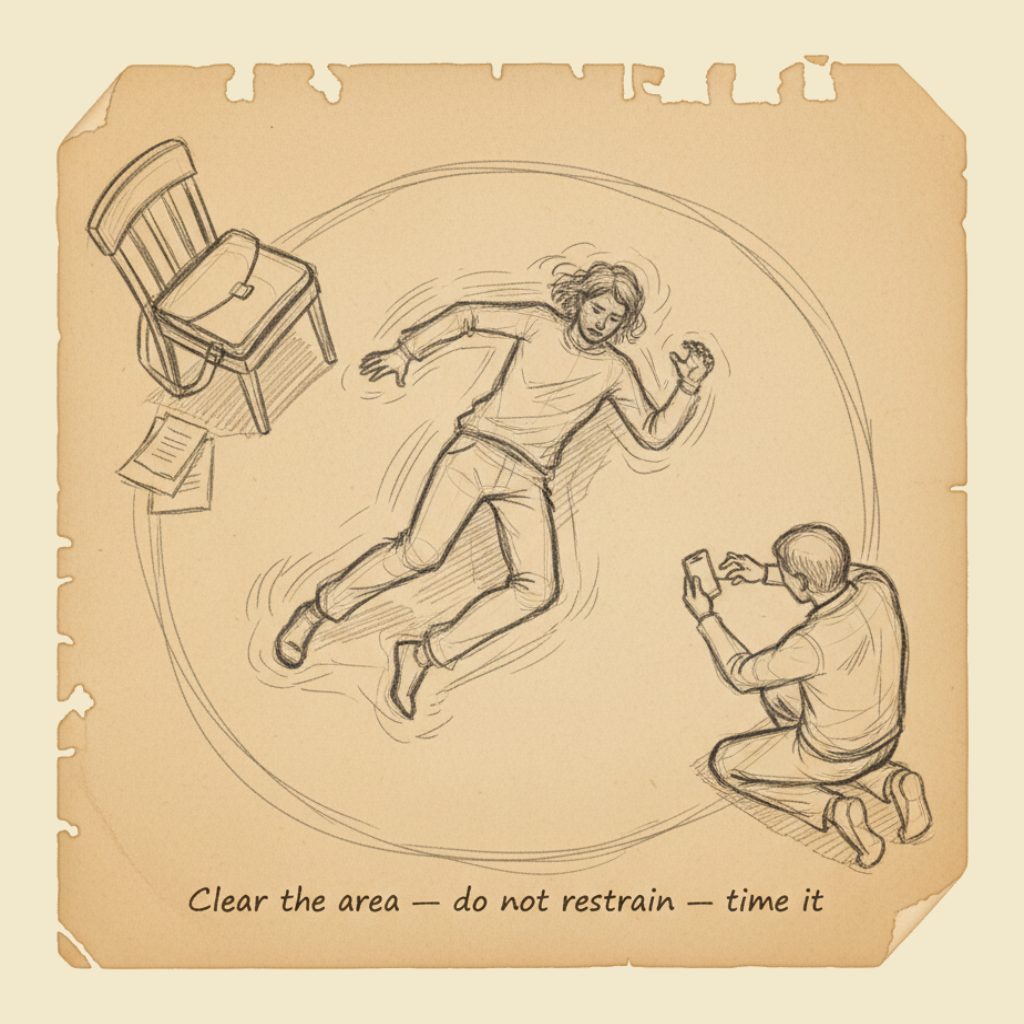
A seizure is what happens when the electrical activity of the brain temporarily fires in a disorganised way. The visible result depends on which part of the brain is involved. Some seizures are the dramatic full-body picture most people imagine — the casualty collapses, becomes unresponsive, the limbs stiffen and then jerk rhythmically, sometimes there's drooling or incontinence, the lips may briefly turn blue. Others are subtle: a brief blank stare, repeated lip-smacking, a sudden jerk of one arm, a few seconds of unresponsiveness with no movement at all.
Causes are wide. Epilepsy is the long-term condition of being prone to recurring seizures, and it is the most common reason a first aider will see one. But seizures also happen in head injury, stroke, severe low blood sugar, drug or alcohol overdose or withdrawal, severe poisoning, and (in young children) a fast fever — that last one has its own glossary entry under febrile convulsion.
First aid is short and very specific. Protect the casualty from injury, but do not restrain them and do not put anything in their mouth — both old folk-rules cause more harm than they prevent. Move hard or sharp objects out of the way, cushion the head with something soft, loosen anything tight around the neck. Note the time the seizure starts. When the jerking stops, gently roll the casualty onto their side in the recovery position; they will be drowsy and confused for several minutes — this is normal and is called the postictal phase. Stay with them and reassure them as they come round.
Call an ambulance for any seizure that is the casualty's first ever, any seizure lasting more than five minutes, any second seizure without full recovery in between, any seizure in water, any injury during the seizure, any seizure in pregnancy or in diabetes, and any seizure where you are unsure.
§ ANZCOR reference
9.2.4