n. · a glossary entry from the working vocabulary.
Poisoning.
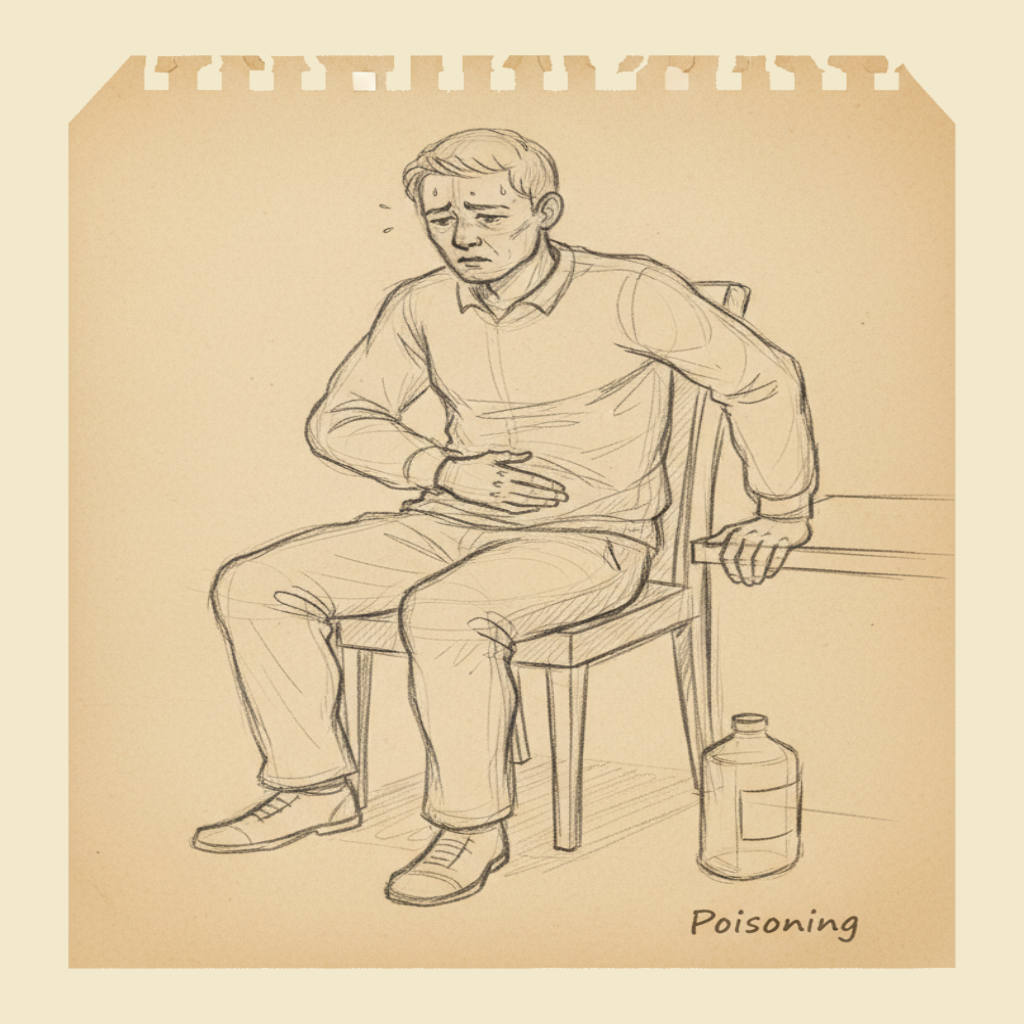
§ short definition
Harm caused by a substance taken into the body that interferes with how it works — by swallowing, breathing, absorbing through the skin, or injecting.
§ long definition

Poisoning is what happens when a substance enters the body in an amount large enough to make it sick. The substance can be a household chemical, a medication taken incorrectly, an illicit drug, alcohol, a pesticide, an industrial gas, an unsafe plant or mushroom, or a contaminated food. Australia has four routes of entry that the first aider thinks about: swallowed (most poisonings, especially children with household products), inhaled (smoke, carbon monoxide, vapours), absorbed (chemical splashes through skin), and injected (drugs, some bites and stings — covered separately under envenomation).
The single most useful thing a first aider can do is call the Poisons Information Centre on 13 11 26 (in Australia). They are open 24 hours, they can identify the substance from the bottle or packet you describe, and they will tell you on the phone what to do — including whether to call an ambulance. Take the container, the label, the leftover substance and any vomit with you (or describe them on the phone).
General first aid for the four routes is short. Swallowed: do not make the casualty vomit, do not give anything to drink unless Poisons tell you to — some substances do more damage on the way back up. Wipe any residue off the lips. Inhaled: protect yourself first, then move the casualty into fresh air; carbon monoxide and confined-space gases will quietly take a rescuer too. Absorbed: remove contaminated clothing wearing gloves if possible, and irrigate the affected skin with copious running water. For any poisoning where the casualty is unresponsive, not breathing normally, fitting, or rapidly deteriorating, call an ambulance immediately and start the usual DRSABCD response.
§ ANZCOR reference
9.5.1