n. · a glossary entry from the working vocabulary.
Nosebleed.

§ short definition
Bleeding from inside the nose, almost always from the small fragile blood vessels at the front of the nasal septum.
§ long definition
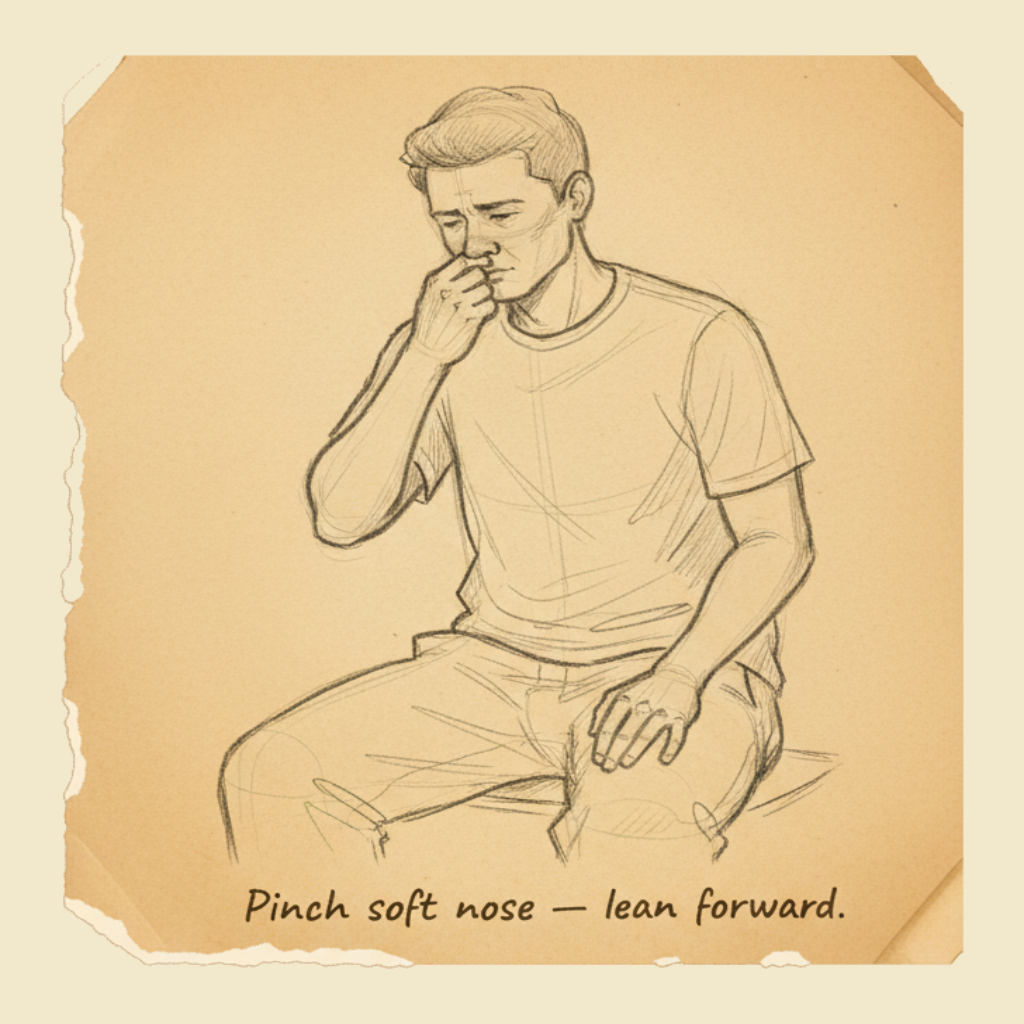
A nosebleed is the most common bleeding most first aiders will ever treat. The vast majority come from a small cluster of blood vessels just inside the front of the nose, in the soft fleshy bit of the septum, where the lining is thin and the vessels are easy to damage. They start for plenty of reasons — a knock, a sneeze, a dry day, vigorous nose-blowing, picking, irritation, sometimes nothing the casualty can name — and they look much more dramatic than they are.
First aid is short and very effective if it is done correctly. Sit the casualty upright, leaning slightly forward so blood drips out the front rather than down the throat (swallowed blood causes vomiting). Pinch the soft fleshy part of the nose — not the bony bridge — between thumb and forefinger and hold continuous firm pressure for ten minutes by the clock without letting go to peek. Ten full minutes is the rule most casualties get wrong: they release at three minutes, see blood, and reset the clock. Tell them in advance.
After ten minutes, release gently. If the bleeding has stopped, ask the casualty not to blow, pick or touch the nose, not to bend forwards, and not to drink hot drinks for several hours, to avoid dislodging the soft clot. If bleeding restarts, repeat the ten-minute pinch. Call an ambulance if bleeding is severe, if it has not stopped after twenty minutes of correct pressure, if it followed a head injury, if the casualty is on blood-thinning medication, or if they are pale, dizzy or feel faint.
§ ANZCOR reference
9.1.1