n. · a glossary entry from the working vocabulary.
Hypothermia.
§ short definition
A dangerously low core body temperature, where the body is losing heat faster than it can replace it.
§ long definition
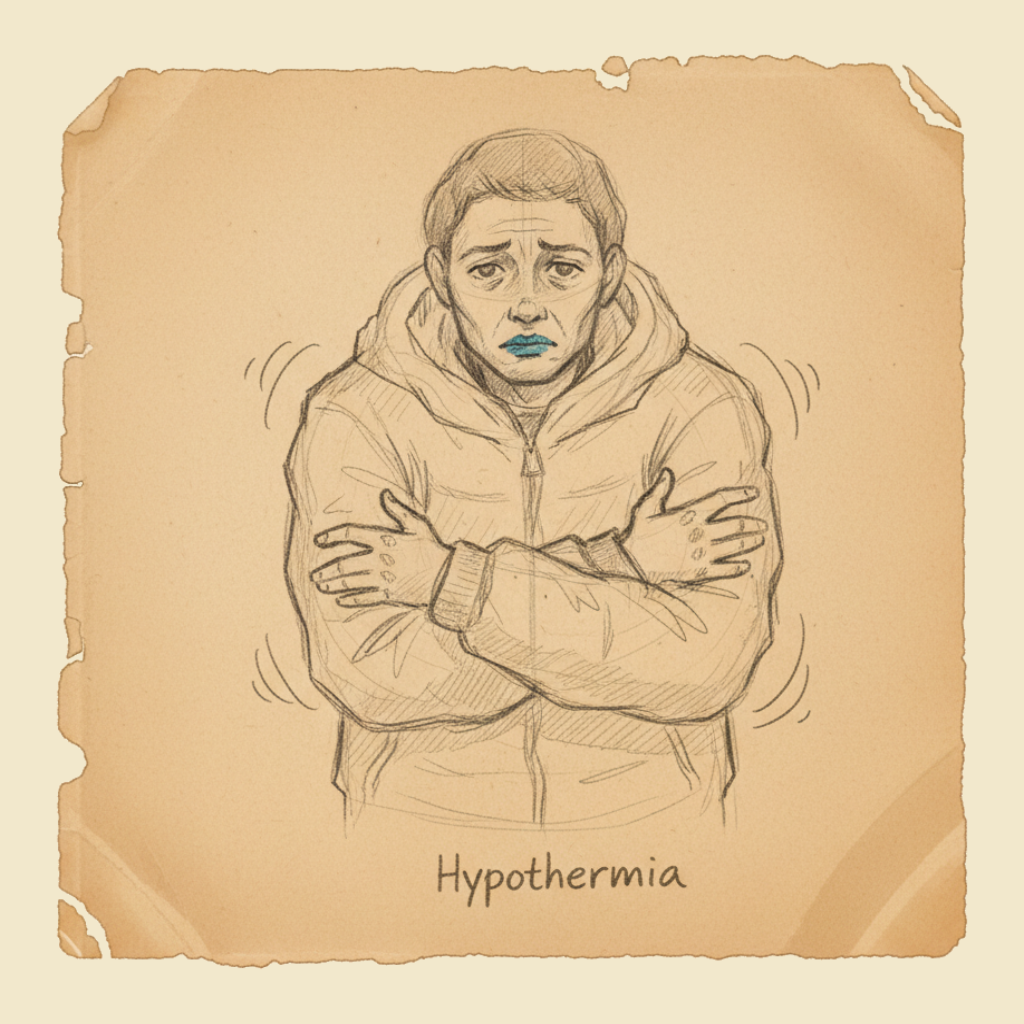
Hypothermia is the opposite of hyperthermia: the body is losing heat faster than it can produce it, and the core temperature is falling out of its safe range. It does not require Antarctic conditions — most Australian hypothermia happens in spring and autumn at moderate temperatures, when someone is wet, tired, underdressed, in the wind, or all of the above. Bushwalkers caught out by weather, swimmers in cold water, the elderly in unheated homes, and casualties of any other emergency lying still on cold ground are the typical picture.
First aiders sort it by severity. Mild hypothermia (core around 32–35°C) shows up as shivering, cold and pale skin, slight confusion, slurred speech, fumbling fingers, and the casualty is still able to help themselves. Moderate to severe hypothermia (below 32°C) is the dangerous one: the shivering stops (the body has run out of fuel for it), the casualty becomes drowsy, uncoordinated and apathetic, the pulse and breathing slow, and consciousness fades. Some severe cases paradoxically begin undressing themselves — a sign of brain dysfunction, not of recovery.
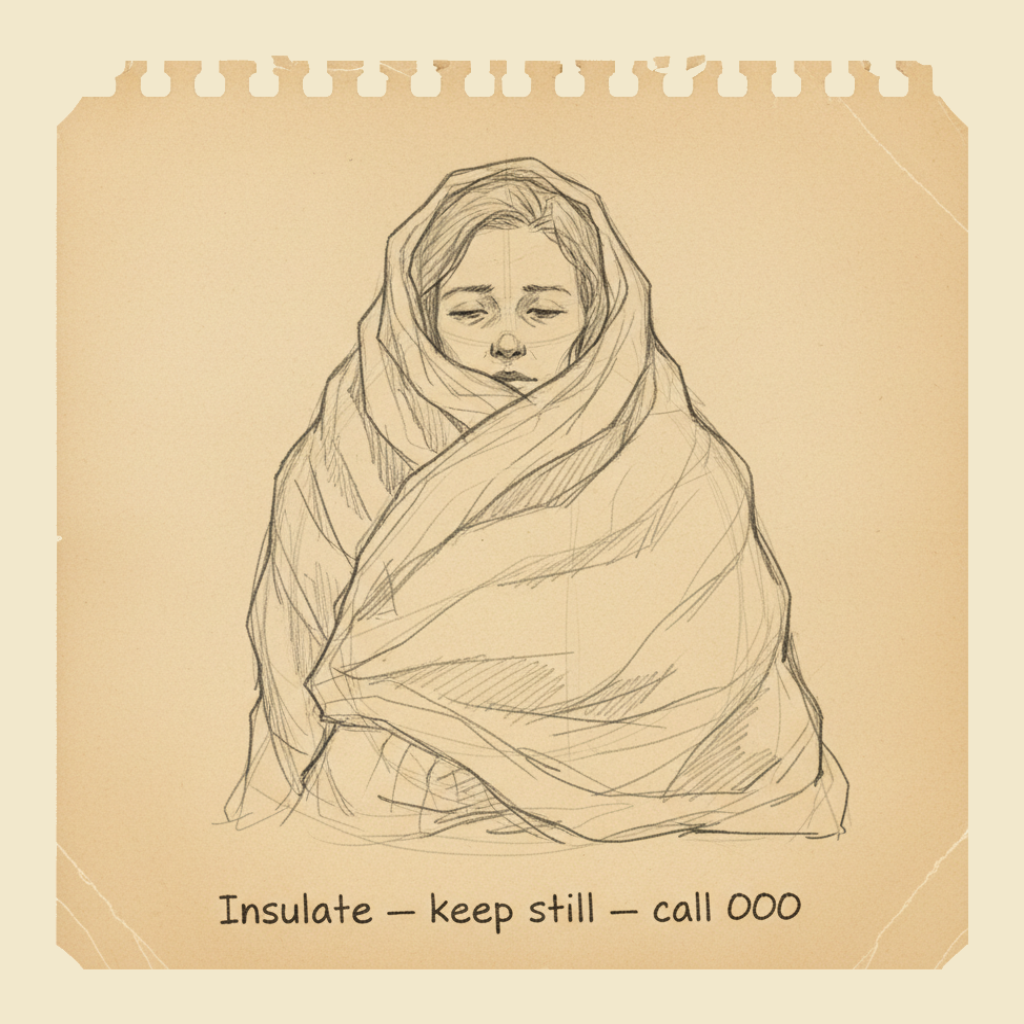
First aid is prevent further heat loss, then rewarm gently. Move the casualty out of wind and rain, replace wet clothes with dry ones (or insulate them with whatever you have), wrap them including the head in blankets or a sleeping bag, get them off cold ground onto an insulating layer, and shelter them. If they are alert and can swallow, give warm sweet drinks — not alcohol, not caffeine. Do not rub the skin, do not put them in a hot bath, do not apply direct heat to the limbs. For moderate or severe hypothermia, handle the casualty very gently — rough movement can trigger a fatal cardiac arrest in a cold heart — and call an ambulance. If they go into cardiac arrest, start CPR; ANZCOR teaches that nobody is "dead" of hypothermia until they are warm and dead, so do not stop CPR easily.
§ ANZCOR reference
9.3.3