n. · a glossary entry from the working vocabulary.
Hyperthermia.
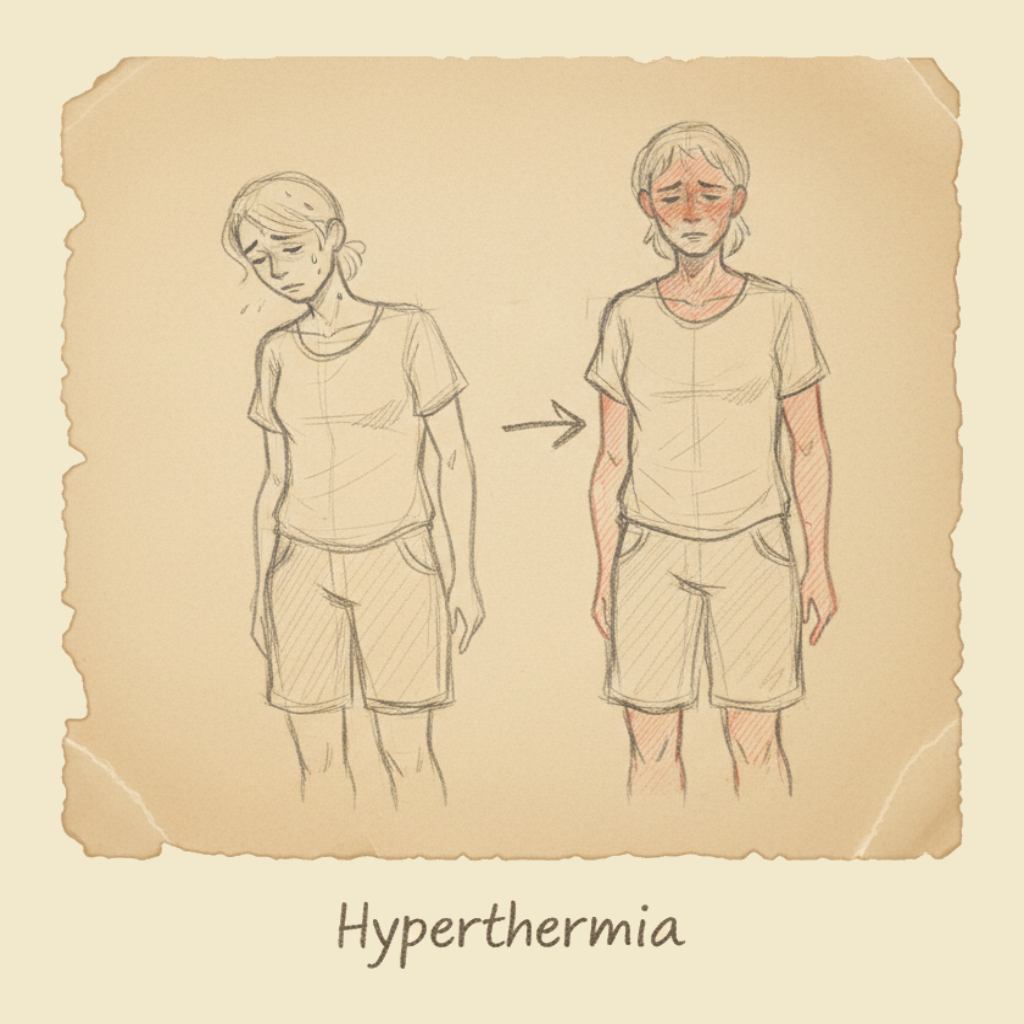
§ short definition
A dangerously high core body temperature caused by the body taking in or generating more heat than it can lose.
§ long definition
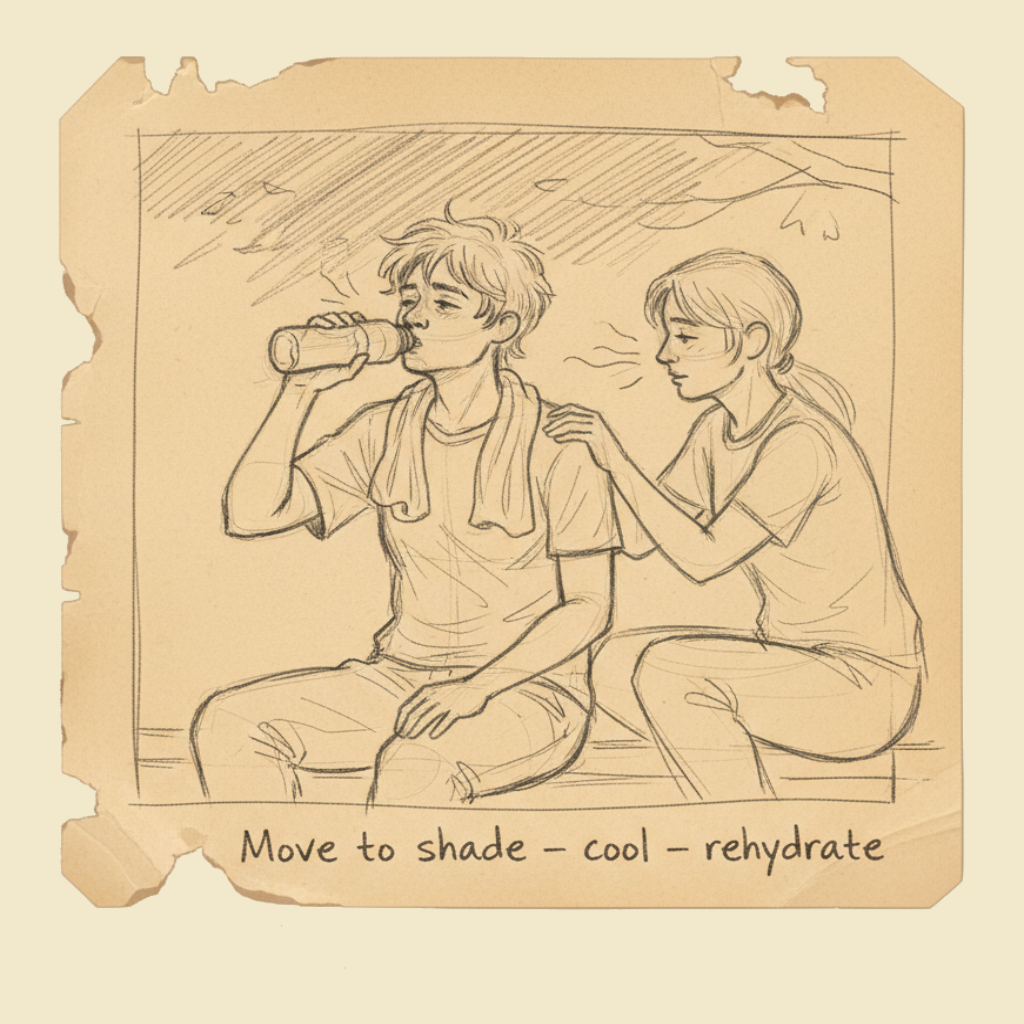
Hyperthermia is the umbrella word for any state in which the body's core temperature has climbed above its safe range. It is not the same as a fever — a fever is the body deliberately resetting its thermostat upwards in response to infection; hyperthermia is the body losing the fight to keep cool. In a hot Australian summer it can happen to bushwalkers, athletes, outdoor workers, kids in cars and frail older adults in unairconditioned homes.
First aiders sort it into a spectrum. Heat exhaustion comes first: heavy sweating, fast pulse, weakness, muscle cramps, headache, nausea, cool clammy skin even though the core is rising, and the casualty feels awful but is still mentally clear. Heat stroke is the medical emergency it can become if heat exhaustion is not treated: core temperature above 40°C, hot dry (or sometimes still sweaty) skin, a fast bounding pulse, and — the decisive sign — altered mental state: confusion, staggering, irrational behaviour, slurred speech, seizures, collapse. Heat stroke can kill within an hour if the core is not brought down, and it causes lasting brain damage in survivors who are cooled too slowly.
First aid is the same shape for both, escalating with severity: stop the activity, move to a cool shaded place, remove excess clothing, and start cooling fast. The most effective field cooling is wetting the casualty all over with cool (not icy) water and fanning vigorously to drive evaporation; cool packs to neck, armpits and groin help. If the casualty is awake and can swallow, give cool water in small frequent sips. For suspected heat stroke (any altered mental state), call an ambulance immediately and keep cooling all the way until they arrive — the time-to-cool is what saves the casualty.
§ ANZCOR reference
9.3.4