n. · a glossary entry from the working vocabulary.
Fracture.
§ short definition
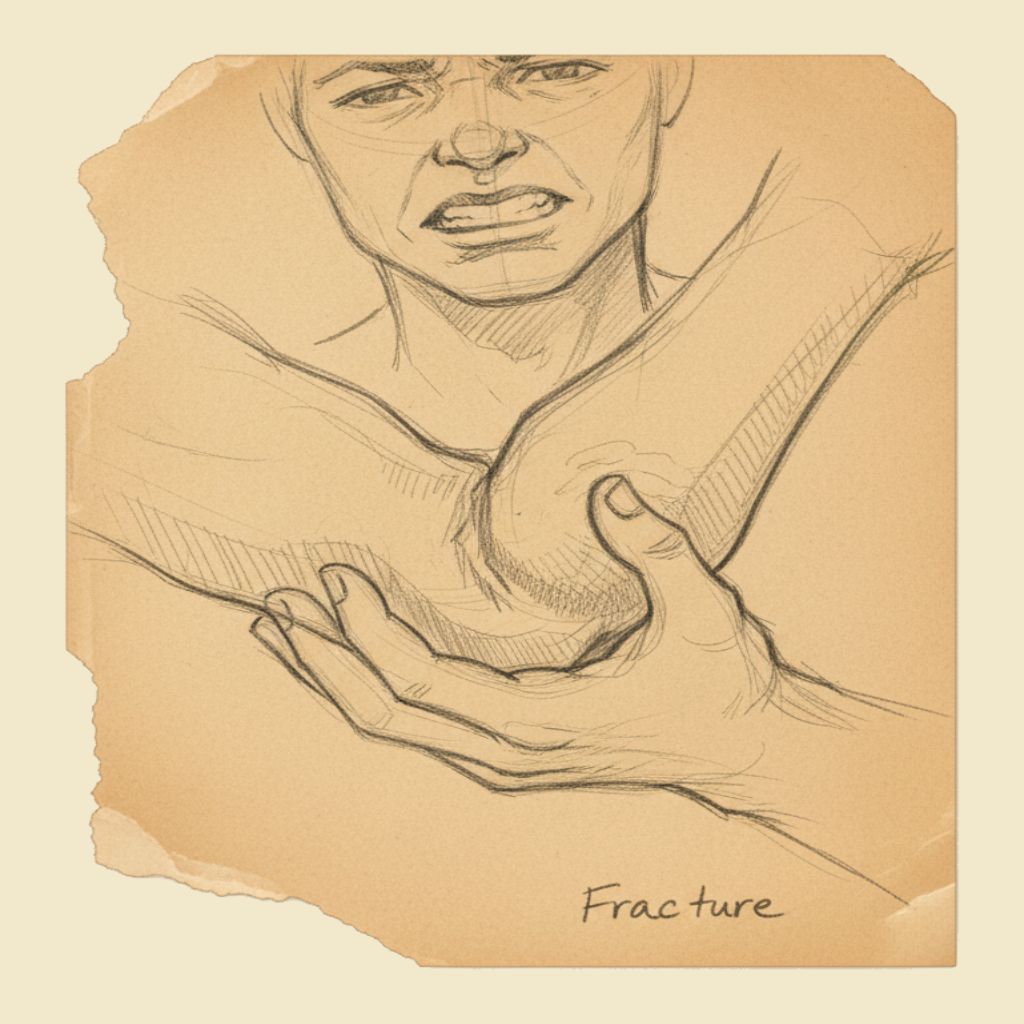
A break in a bone, ranging from a hairline crack to a complete separation of the two ends.
§ long definition
A fracture is what doctors call a broken bone. The word covers everything from a hairline crack invisible without an X-ray to a bone that has snapped clean through and is poking out of the skin. First aiders sort fractures into two types because the action is different: a closed fracture has the skin intact above it, and an open (or "compound") fracture has bone exposed or a wound in the skin overlying the break. Open fractures are at much higher risk of infection and are an immediate hospital case.
The signs you look for are pain at the site, swelling, bruising, loss of normal use of the limb, an obvious deformity (a wrong angle, a shortening, a step in the bone), and sometimes a grinding feeling the casualty can describe but you should not test for. The casualty may have heard or felt a snap. Cold, pale, or numb fingers or toes past the break are an emergency in their own right — circulation or nerves may be compromised.
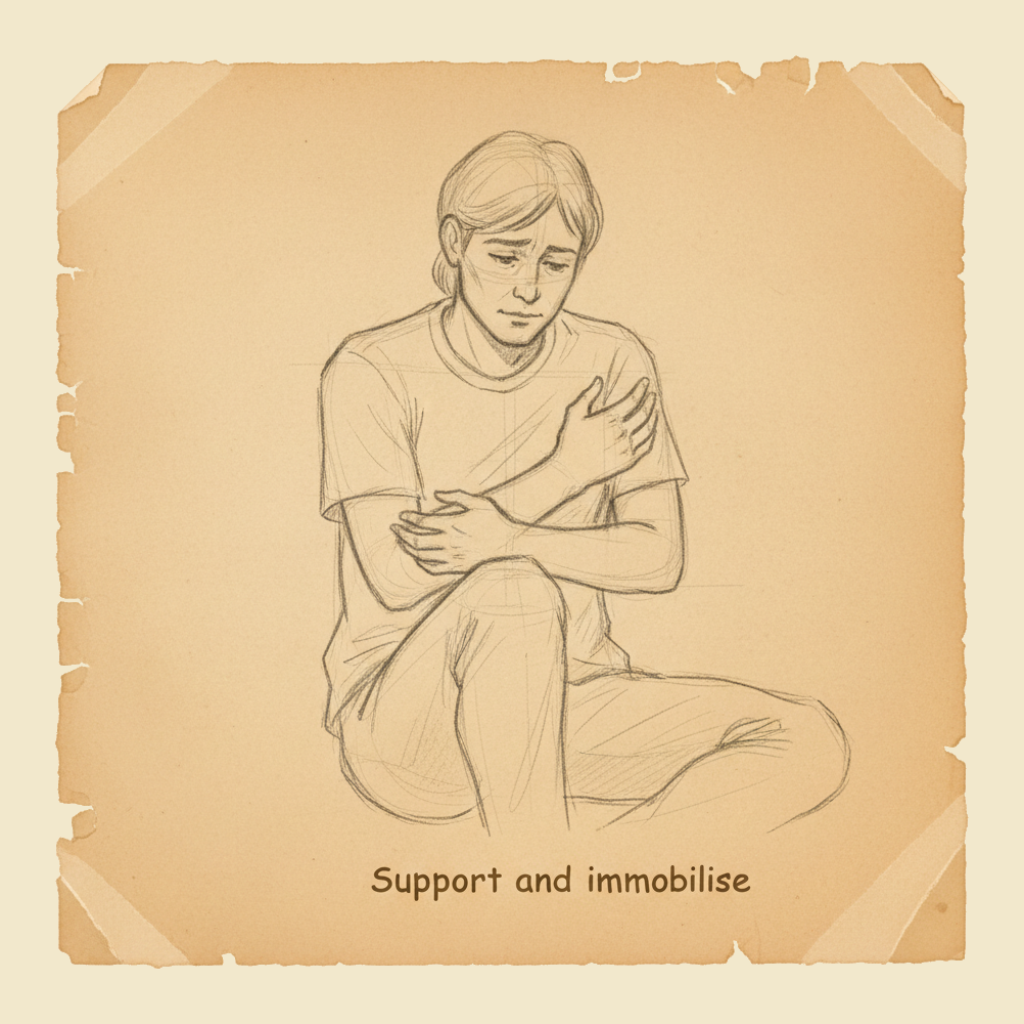
First aid is built around three words: rest, immobilise, support. Stop the casualty from moving the limb. Support the injured part by hand at first, then with a sling, splint, or by tying the injured limb gently to the uninjured one. Do not try to push a deformed bone back into place, do not push an exposed bone end back under the skin, and do not give the casualty anything to eat or drink in case they need surgery. Cover any open fracture wound with a clean non-stick dressing — apply pressure around the bone end, never directly on it. Treat for shock, monitor circulation past the break, and call an ambulance for anything more than an obvious finger or toe.