n. · a glossary entry from the working vocabulary.
Febrile convulsion.
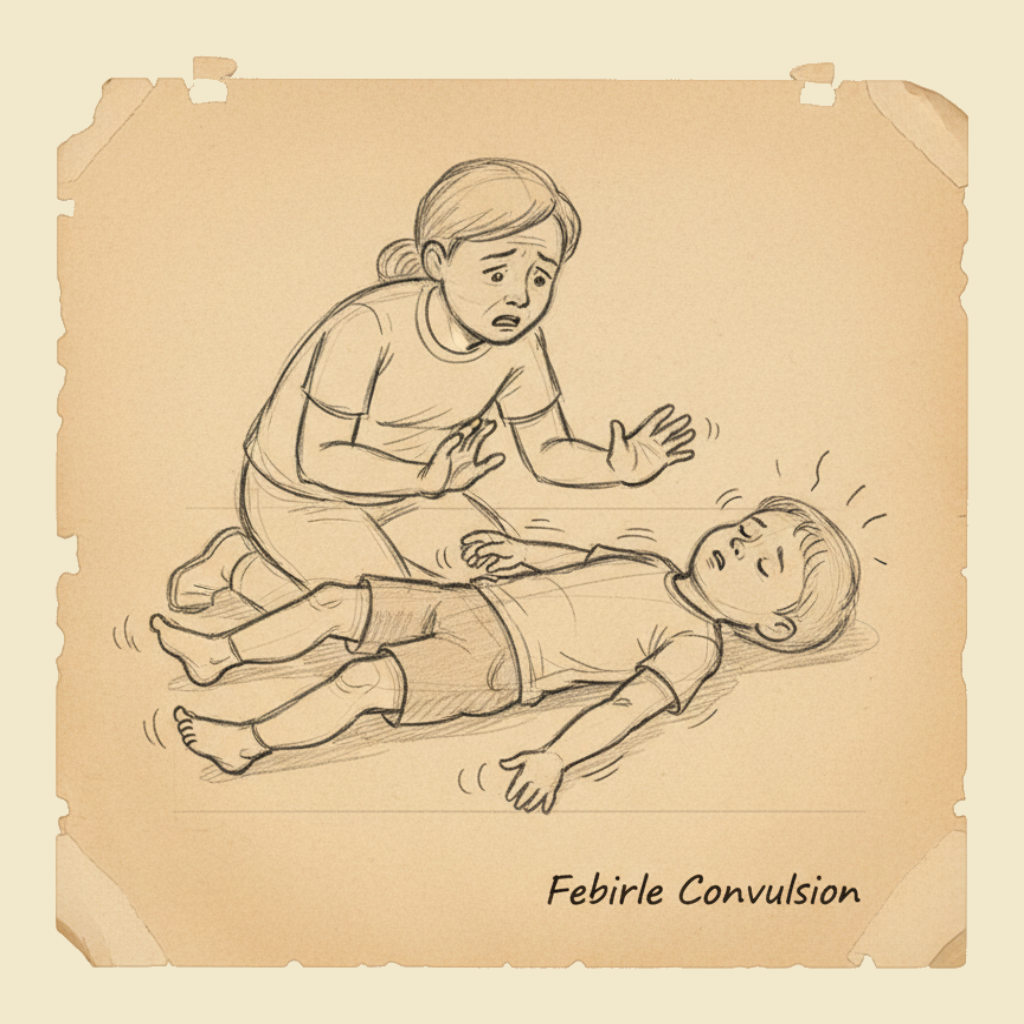
§ short definition
A seizure triggered by a rapidly rising fever in a young child, usually between six months and five years of age.
§ long definition
A febrile convulsion is the medical name for the kind of seizure young children sometimes have when their body temperature climbs fast — typically with a viral illness, an ear infection, or a vaccination response. It is the trigger that's specific, not the seizure itself: the brain of a young child is unusually sensitive to a rapid temperature rise, and the convulsion is the visible result. Most febrile convulsions happen in children between six months and five years old, and most children who have one never have another.
The picture is upsetting to watch and easy to recognise: the child becomes unresponsive, may stiffen or arch their back, the eyes roll back or stare, the limbs jerk rhythmically, sometimes there's drooling, sometimes a brief blue tinge around the lips, and the child is hot to touch. Most febrile convulsions are over within a couple of minutes and the child is then drowsy and sleepy for a while afterwards.
First aid is the standard ANZCOR seizure approach with one addition for the heat. Protect the child from injury — clear hard objects out of the way, cushion the head with something soft, do not restrain them, do not put anything in their mouth. Note the time the seizure starts. Once the jerking has stopped, roll the child onto their side in the recovery position. Then start cooling — remove excess clothing, sponge with tepid water (not cold), keep the room cool. Always call an ambulance for a child's first-ever febrile convulsion, for any seizure lasting more than five minutes, for any second seizure in the same illness, or if the child does not return to their normal self within an hour.
§ ANZCOR reference
9.2.4