n. · a glossary entry from the working vocabulary.
Drowning.
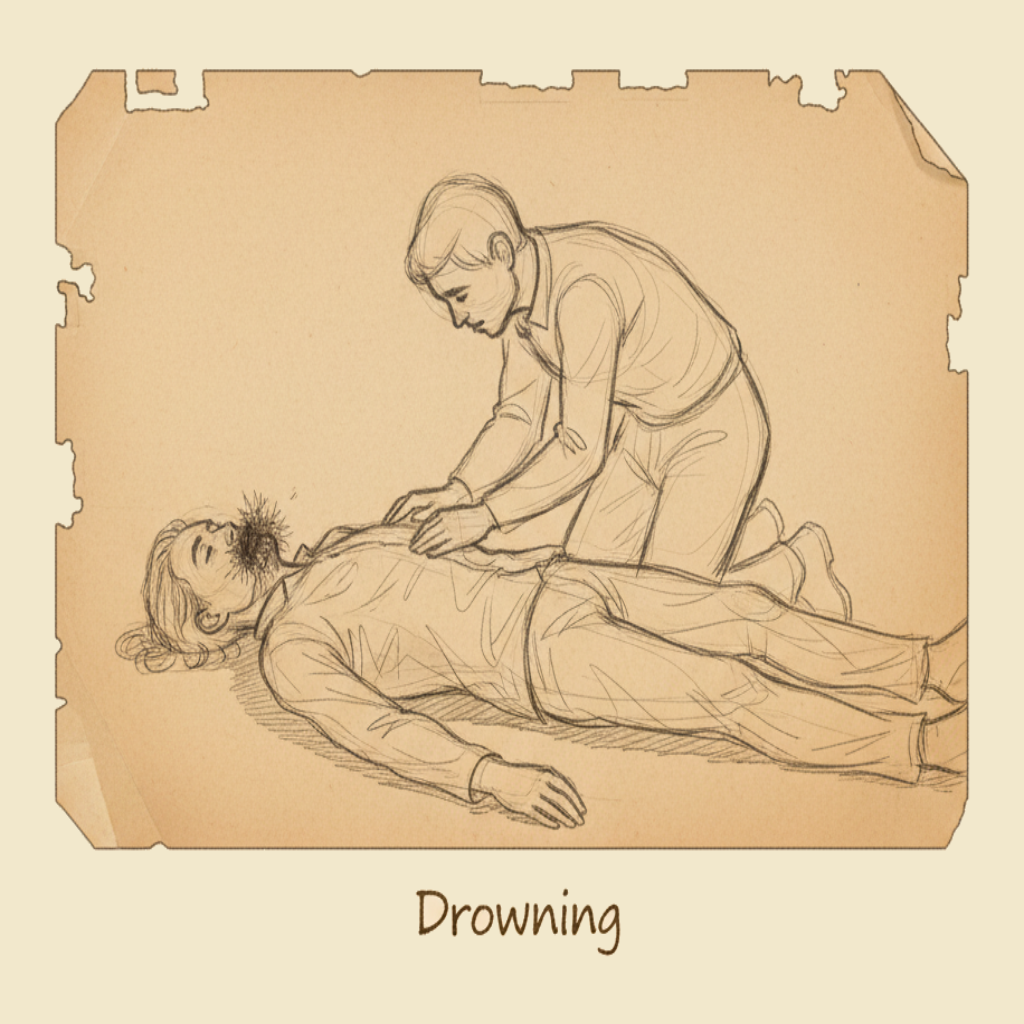
§ short definition
The process of breathing in liquid because the airway is below the surface of water — the leading cause of accidental death in Australian children under five.
§ long definition
Drowning is technically defined as respiratory impairment from immersion or submersion in liquid. In plain English: the airway has gone under water, and the casualty is breathing the wrong thing. It is a process, not an event — it can be interrupted at any stage, which is why getting them out of the water and starting first aid fast is everything. The old Hollywood picture of dramatic splashing and shouting is wrong: real drowning is usually quiet, with the casualty vertical in the water, head tilted back, arms pressing down trying to keep the mouth above the surface, no breath spare to call for help.
First aid is shaped by the unusual physiology of drowning: the casualty is in cardiac arrest because they couldn't breathe, not the other way around, so giving oxygen back to them is the most important step. Get them out of the water without becoming a second casualty — throw a rope or a flotation aid before you go in. Once they are on a flat surface, if they are unresponsive and not breathing normally, ANZCOR breaks the usual CPR sequence and tells you to give 5 initial rescue breaths before starting the normal 30-and-2 cycle, because the priority is filling lungs that have been emptied of oxygen. Call an ambulance early. Expect vomiting — it is extremely common — and roll them to clear it.
Every drowning casualty who has needed any rescue breathing should be assessed in hospital, even if they look completely fine afterwards. Water in the lungs can cause delayed respiratory problems hours later.
§ ANZCOR reference
9.3.2