n. · a glossary entry from the working vocabulary.
Diabetes.
§ short definition
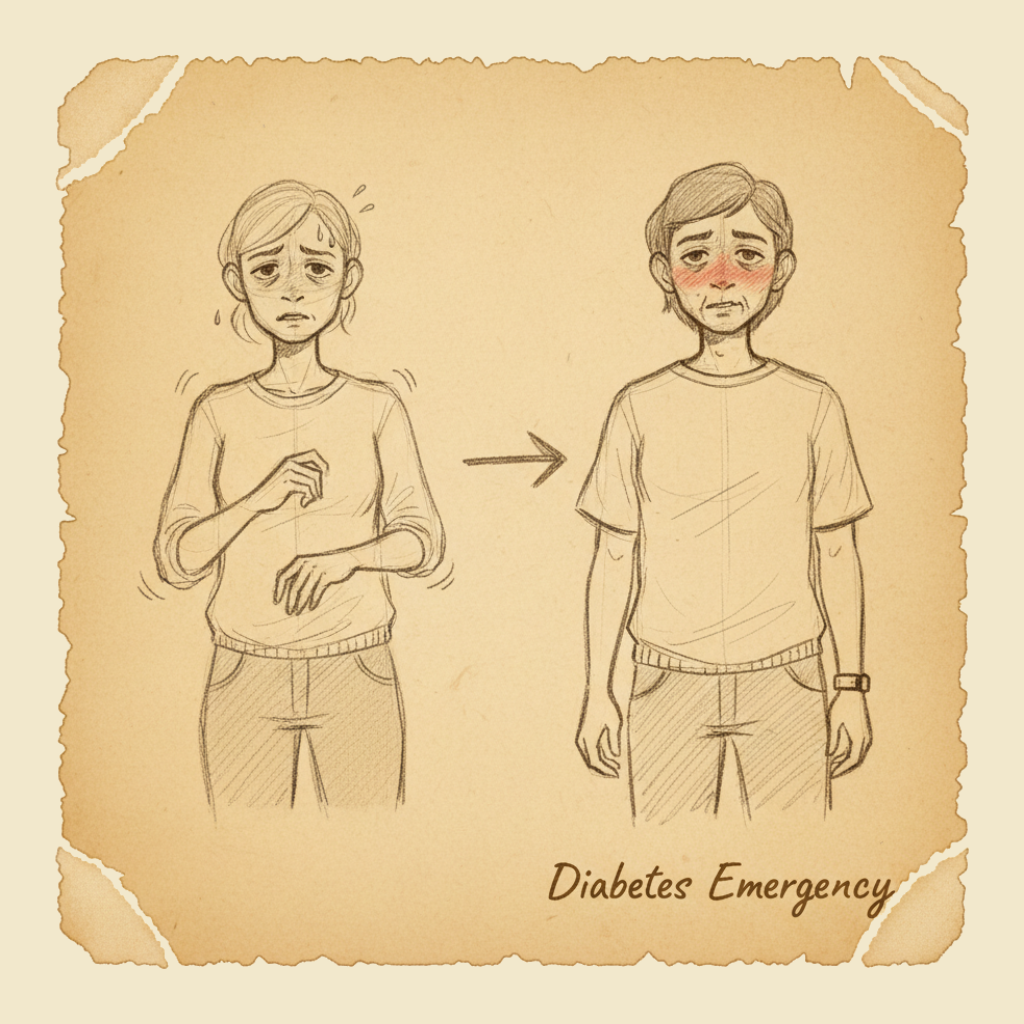
A long-term condition in which the body cannot keep blood-sugar levels in their normal range, leading to either hypoglycaemia (too low) or hyperglycaemia (too high).
§ long definition
Diabetes is a chronic condition affecting how the body handles glucose — the sugar that cells run on. In type 1 diabetes the pancreas no longer makes insulin, the hormone that lets glucose move from the blood into cells, and the casualty must inject insulin to live. In type 2 diabetes the body still makes insulin but the cells respond poorly to it; this is managed with diet, exercise, oral medication, and sometimes insulin too.
First aiders almost never have to diagnose diabetes — what they have to do is recognise its two emergencies. Hypoglycaemia ("hypo", low blood sugar) is the more common and the more urgent. It comes on fast — minutes — usually after a missed meal, extra exercise, or a normal insulin dose with too little food. The casualty becomes pale, sweaty, shaky, hungry, irritable, confused, and may slur their speech in a way that looks like drunkenness; if it isn't treated they go on to seizure or unconsciousness. Hyperglycaemia (high blood sugar) usually comes on over hours to days — thirst, frequent urination, fatigue, fruity breath, deep rapid breathing — and is just as dangerous, but slower.
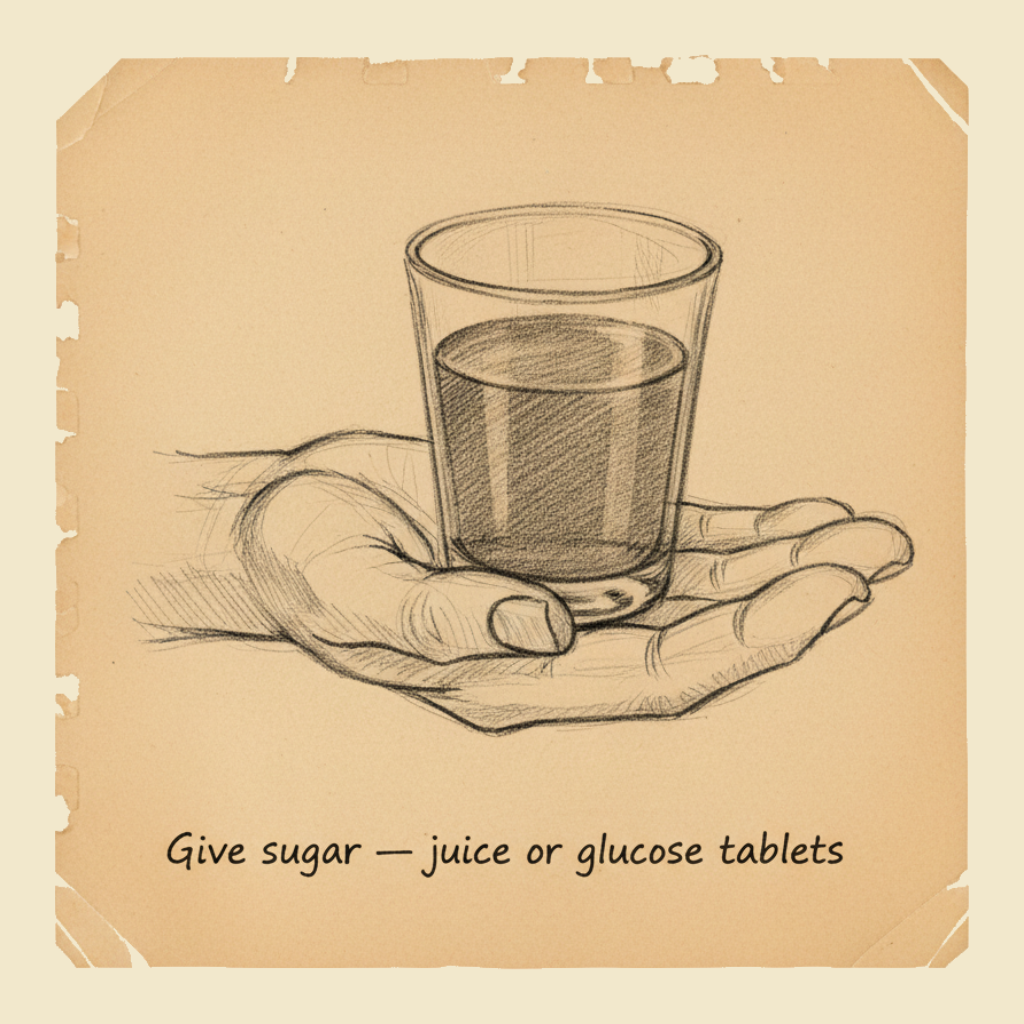
First aid is the same shape regardless of which one you suspect: if the casualty is awake and can swallow, give sugar — a glass of juice, a few jelly beans, a regular soft drink, a teaspoon of honey. This fixes a hypo immediately and does no real harm if the problem was actually a hyper, so when you can't tell, treat for the hypo. Follow up with a longer-acting carbohydrate (a sandwich, a piece of fruit) once they have improved. If the casualty is unresponsive, cannot swallow, or does not improve within 10–15 minutes, call an ambulance and put them in the recovery position. Never put food or drink in the mouth of an unresponsive person.
§ ANZCOR reference
9.2.9