n. · a glossary entry from the working vocabulary.
Dehydration.
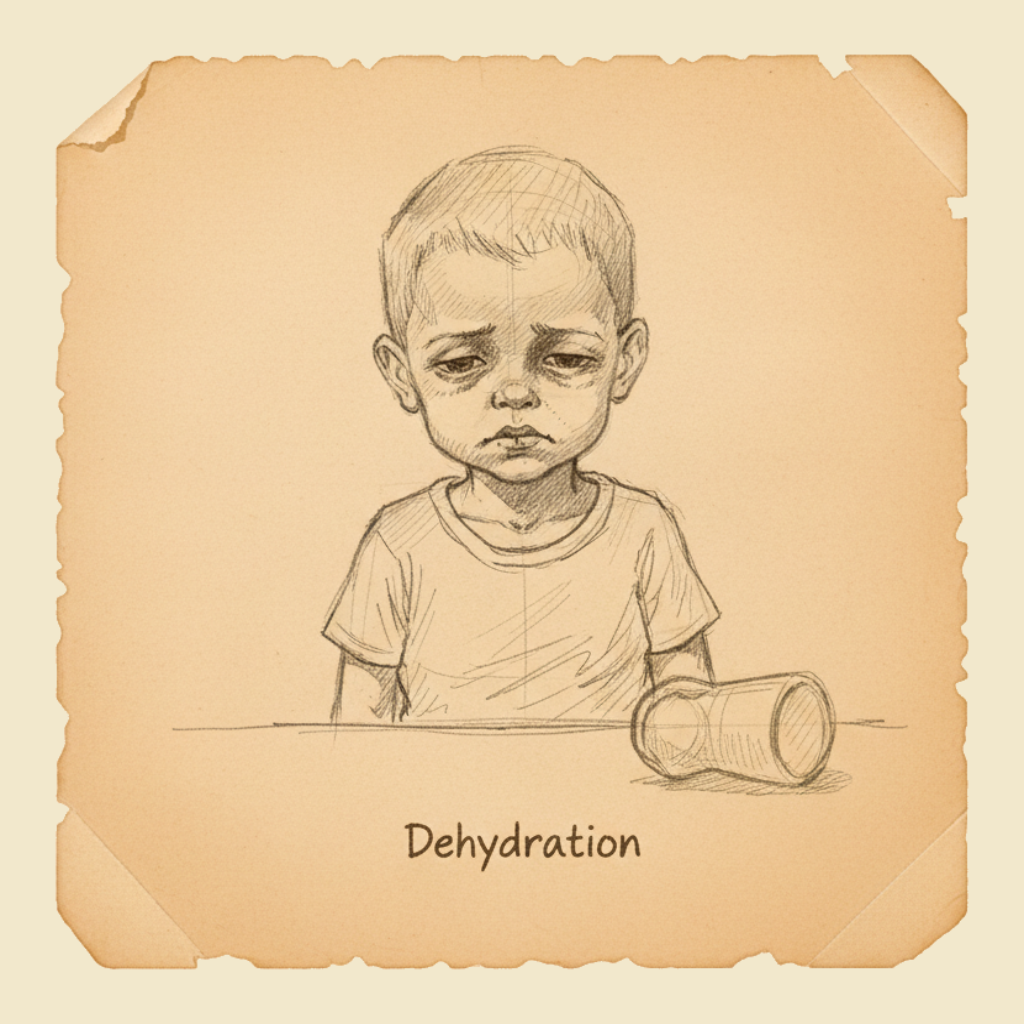
§ short definition
A loss of body water — and the salts dissolved in it — large enough to interfere with how the body works.
§ long definition
Dehydration is what happens when more water leaves the body than goes back in. The water can leave through any combination of sweat (heat, exercise), urine (uncontrolled diabetes, diuretics), the gut (vomiting, diarrhoea), or breathing (long-haul exertion in cold dry air). Salts — sodium and potassium — go with it, which is why rehydration is not just about drinking water but about replacing what was lost.
Mild to moderate dehydration shows up as thirst, a dry mouth, dark concentrated urine, headache, tiredness and a sense of being generally "off". Severe dehydration is a different thing entirely: the casualty becomes dizzy when they stand, the skin loses its elasticity, the heart races to compensate for low circulating volume, and they may become confused, drowsy or collapse. In small children and frail older people the slide from "a bit dry" to "needs a hospital" can be fast.
First aid for mild dehydration is rest in a cool place and small, frequent sips of fluid — water for short-duration exertion, an oral rehydration solution or a sports drink for prolonged exertion or for fluid lost through vomiting and diarrhoea. Avoid alcohol and strong caffeine. Call an ambulance for any casualty who is confused, who cannot keep fluids down, who is a baby or a frail older adult with significant losses, or whose dehydration is paired with a high core temperature — that combination can become heat stroke.