n. · a glossary entry from the working vocabulary.
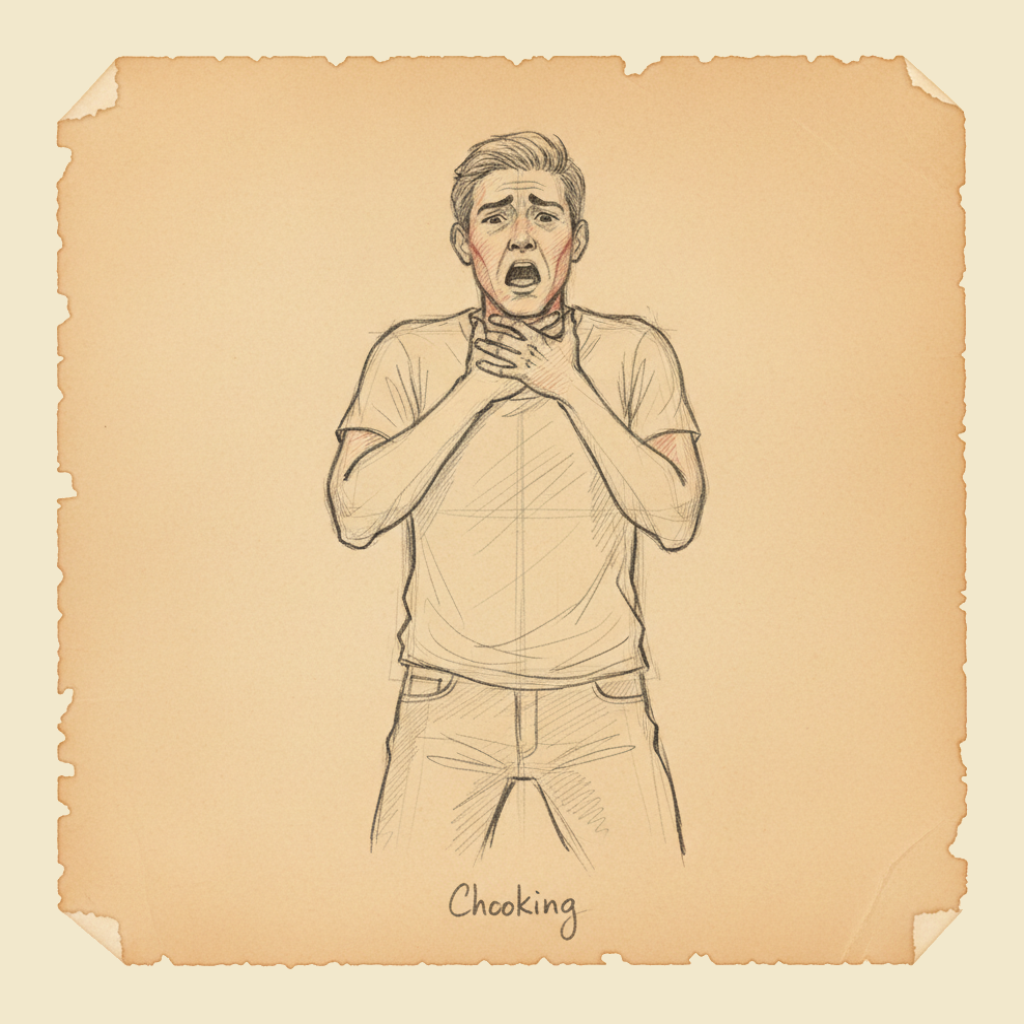
Choking.
§ short definition
Sudden blockage of the upper airway by a foreign body, usually food, that stops air from reaching the lungs.
§ long definition
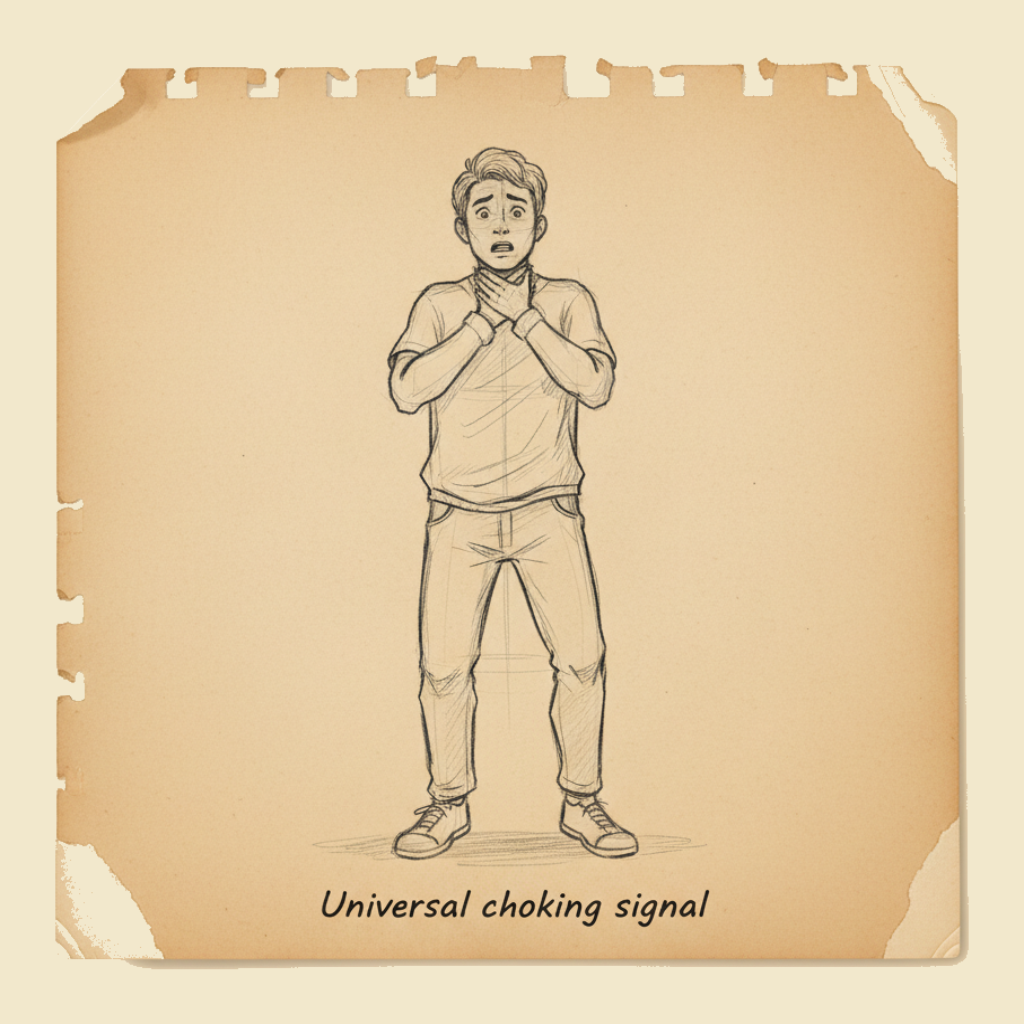
Choking is what happens when something — most often a piece of food, but for small children almost anything: a coin, a button, a grape, a toy part — gets stuck in the upper airway and blocks the flow of air. First aiders sort it into two categories because the action is different for each.
Mild (effective) airway obstruction is when the casualty is still moving some air. They can cough, often forcefully, they may be able to speak in short bursts, and they look distressed but not collapsing. The instruction here is short: encourage them to keep coughing and stay with them. A strong cough is the most effective thing in the room — better than anything you can do — and most mild obstructions clear themselves.
Severe (ineffective) airway obstruction is when air is barely moving or not moving at all. The casualty cannot speak, cannot cough effectively, may be silent, may grip their throat, and is going dusky or blue. This is where you act. The ANZCOR sequence is call an ambulance, then up to five sharp back blows between the shoulder blades with the heel of your hand, checking after each one to see if the obstruction has cleared. If five back blows haven't worked, switch to up to five chest thrusts — same place as CPR compressions but sharper and slower. Alternate sets of five back blows and five chest thrusts until the obstruction clears or the casualty becomes unresponsive — at which point start CPR.
Australian first aid does not teach the abdominal thrust (Heimlich) anymore for routine choking — chest thrusts have replaced it. For an infant under one year, support them face-down along your forearm and use back blows and chest thrusts scaled to their size.
§ ANZCOR reference
4