n. · a glossary entry from the working vocabulary.
Cardiac arrest.
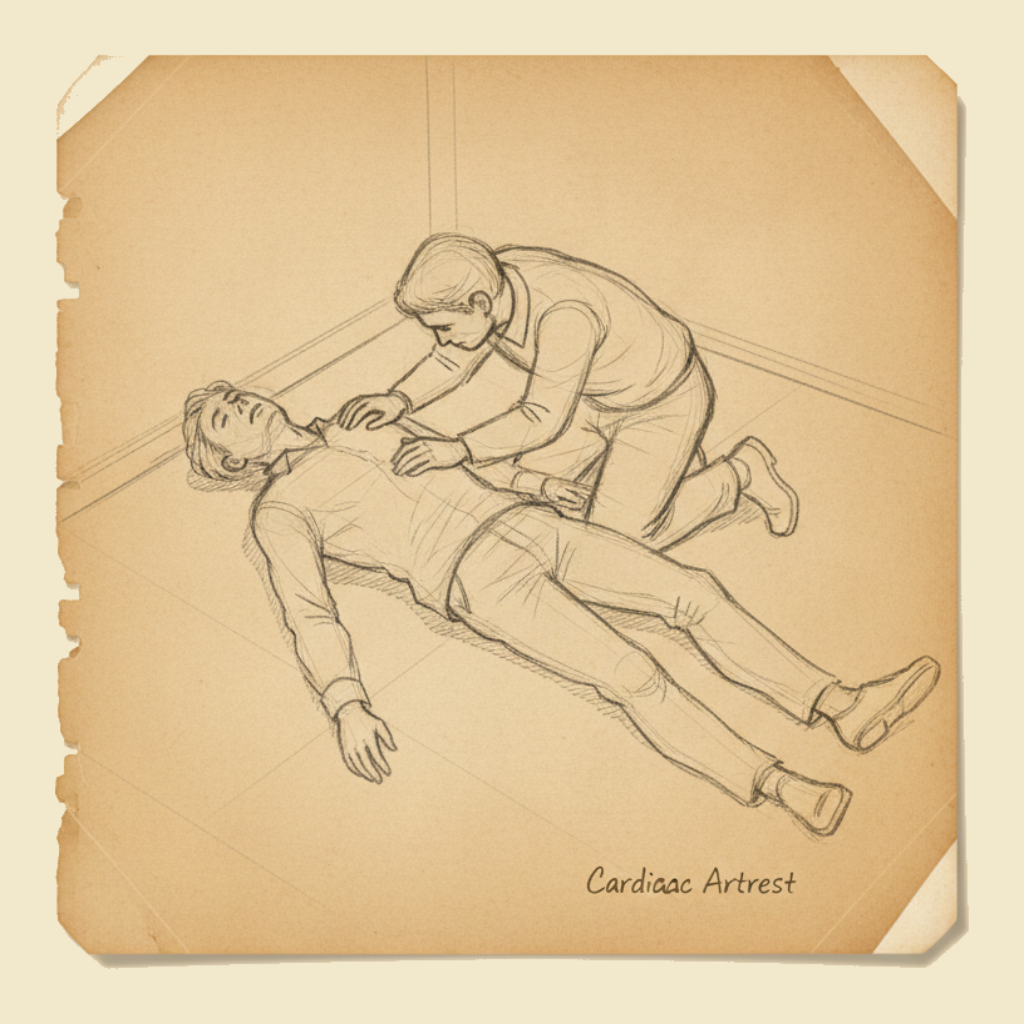
§ short definition
The sudden stopping of an effective heartbeat, leaving the casualty unresponsive and not breathing normally.
§ long definition
Cardiac arrest is the moment a heart stops pumping blood to the body in any useful way. It is not the same as a heart attack: a heart attack is a plumbing problem (a blocked coronary artery starving part of the heart muscle), and a heart attack is one of the things that can cause a cardiac arrest, but plenty of arrests have other causes — drowning, choking, electrocution, severe allergy, drug overdose, major trauma. The distinction matters because the first aid is different. A heart-attack casualty is usually awake and talking; a cardiac-arrest casualty is unresponsive and not breathing normally.
The two signs you act on are simple and they are the only two you need: the casualty is unresponsive, and they are not breathing normally — no breathing at all, or only the slow, gasping, irregular breaths called agonal breathing, which is a sign of arrest, not of life. Do not waste time looking for a pulse; first aiders are not reliable at finding one and the seconds are expensive.
First aid is the ANZCOR Basic Life Support chain: call an ambulance, start CPR, attach a defibrillator (AED) as soon as one is available, and don't stop. Chest compressions in the centre of the chest at 100–120 per minute and 5 cm deep, with two rescue breaths after every 30 compressions if you are trained and willing. Compression-only CPR is fine if you are not. The AED will tell you what to do — follow its voice prompts. Every minute without CPR or defibrillation drops the chance of survival by about 10%, so the shortest possible interval between collapse and the first compression is the single most important thing you can give a cardiac-arrest casualty.
§ ANZCOR reference
8