n. · a glossary entry from the working vocabulary.
Burns.
§ short definition
Tissue damage caused by heat, chemicals, electricity, friction or radiation, classified by depth and by the percentage of body surface involved.
§ long definition
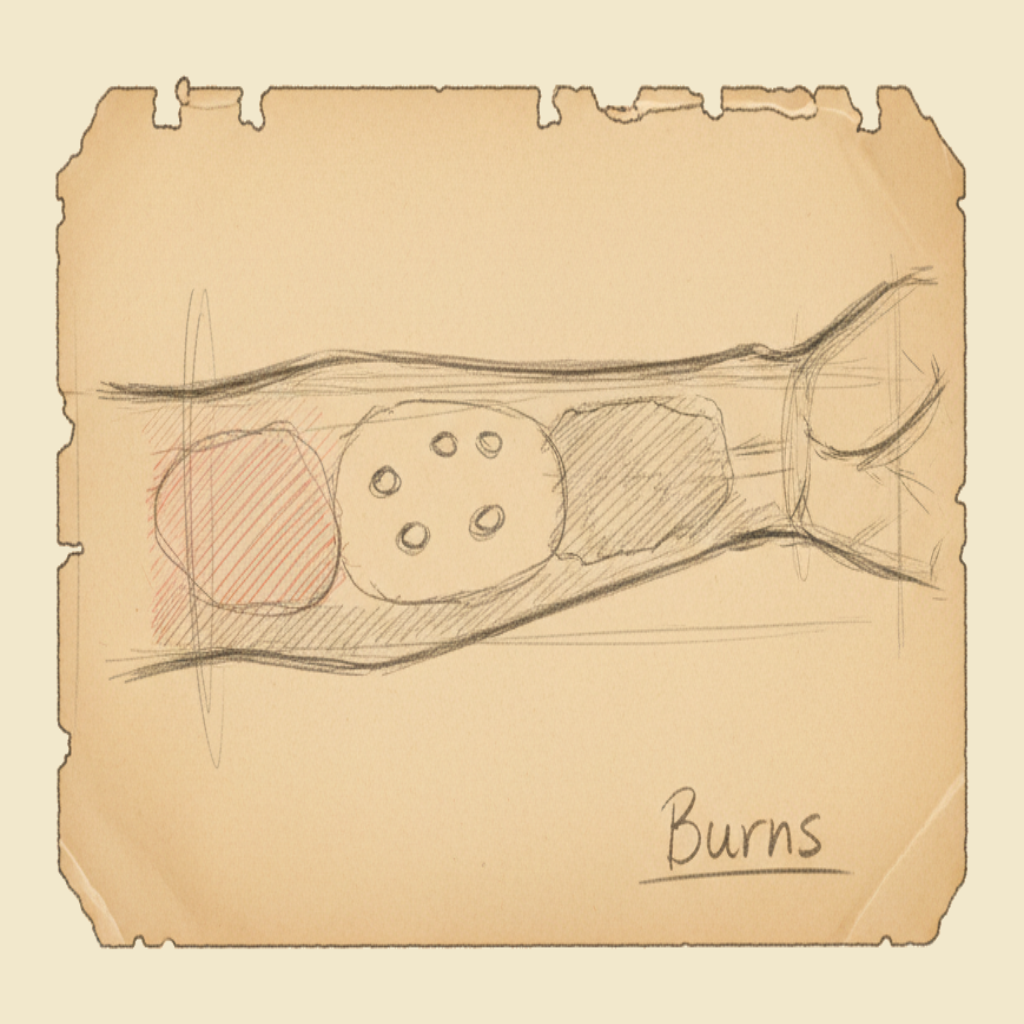
A burn is what happens when the skin (and sometimes the tissue underneath) is destroyed by an outside agent — most often heat, but also chemicals, electricity, friction, or radiation including the sun. Burns are graded two ways: by depth, which tells you how much of the skin is gone, and by area, which tells you how big a problem the body is going to have keeping itself stable.
Superficial burns (the old "first-degree") affect only the top layer of skin — red, painful, dry, no blisters. Superficial partial-thickness burns reach into the dermis — wet, blistered, very painful. Deep partial-thickness burns are paler, less wet, less painful because the nerve endings are damaged. Full-thickness (the old "third-degree") burns destroy the entire skin and may look white, brown, charred or leathery; they are usually painless in the centre because the nerves are gone, with painful partial-thickness burns around the edge.
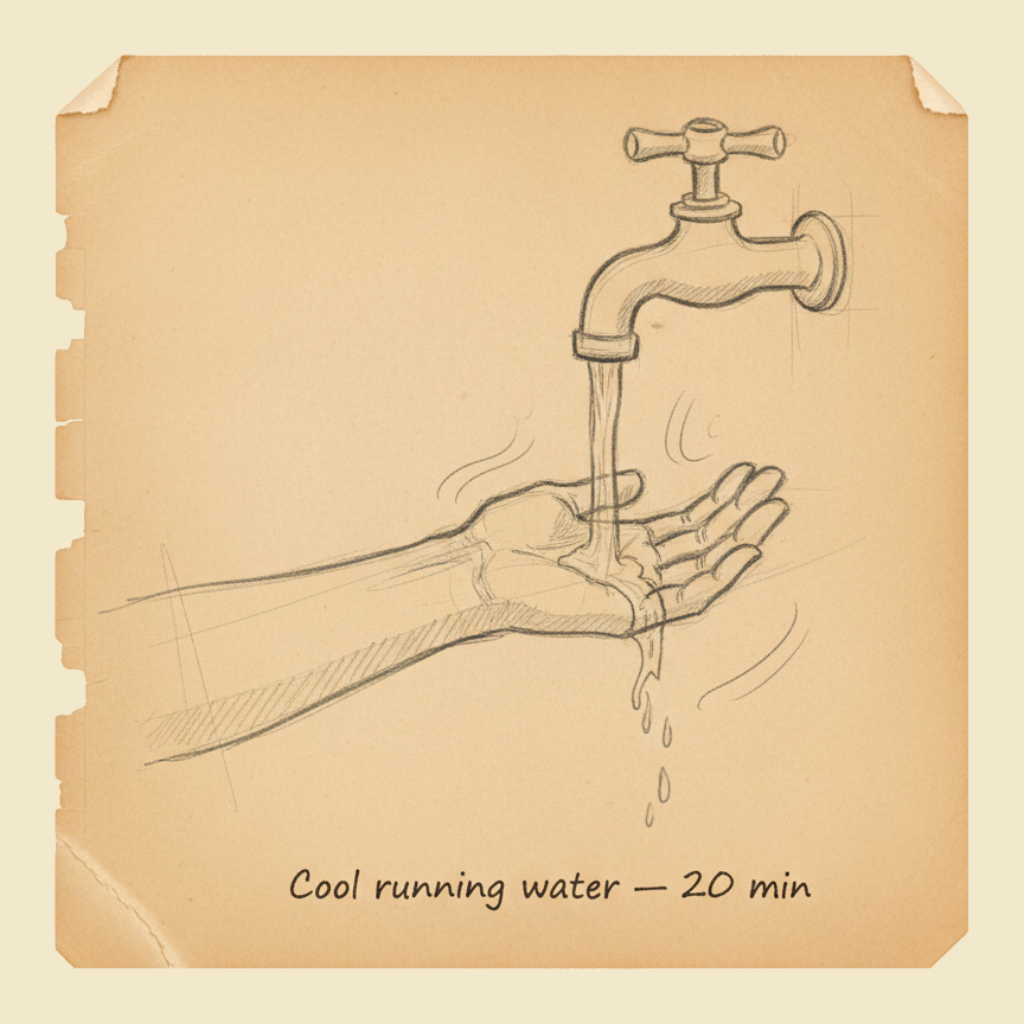
First aid is the same for nearly every thermal burn and it is the single most important thing you can do: cool running water for 20 minutes, ideally within three hours of the burn. This is real treatment, not comfort — it limits how deep the damage goes. Do not use ice, butter, toothpaste or any traditional remedy. Remove jewellery and loose clothing from the area before it swells, but leave anything stuck to the burn alone. Cover loosely with cling film or a clean non-fluffy dressing. Call an ambulance for any burn to the face, hands, feet, genitals or a joint, any burn larger than the casualty's palm, any deep burn, any burn on a child, and any electrical or chemical burn.
§ ANZCOR reference
9.1.3