n. · a glossary entry from the working vocabulary.
Bleeding.
§ short definition
Loss of blood from a damaged blood vessel, classified by the type of vessel as arterial, venous or capillary.
§ long definition
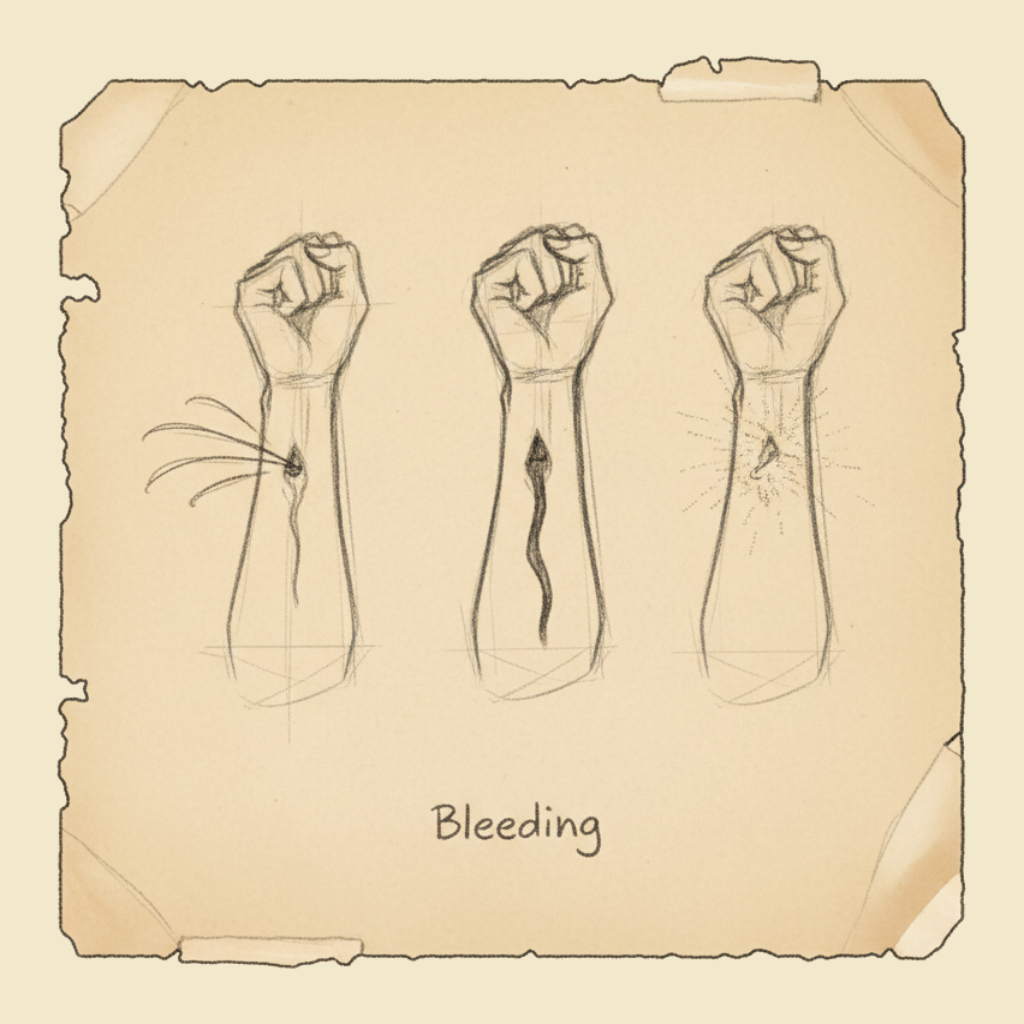
Bleeding is what happens when a blood vessel is broken and the contents escape. First aiders sort it into three patterns by what they can see, because the pattern tells them how urgent it is.
Arterial bleeding comes from a cut artery and is bright red. It spurts in time with the heartbeat and can empty a person fast — this is the one that kills in minutes if it is not stopped. Venous bleeding comes from a cut vein and is darker red. It flows in a steady stream rather than spurts, and is still serious. Capillary bleeding is the slow ooze you see from a graze; it almost always stops on its own.
First aid is the same shape regardless of which type: apply firm, direct pressure to the wound with whatever clean material is to hand, lay the casualty down and elevate the injured part if you can, and call an ambulance for anything more than a minor graze. If blood soaks through the first dressing, do not remove it — add more on top and keep pressing. For life-threatening limb bleeding that direct pressure can't control, a tourniquet placed high and tight above the wound is now the recommended ANZCOR step.
Internal bleeding is bleeding you cannot see — suspect it after any significant blow to the chest, abdomen or pelvis, especially if the casualty is pale, sweaty, thirsty or confused. Treat for shock and call an ambulance immediately.
§ ANZCOR reference
9.1.1