n. · a glossary entry from the working vocabulary.
Asthma.
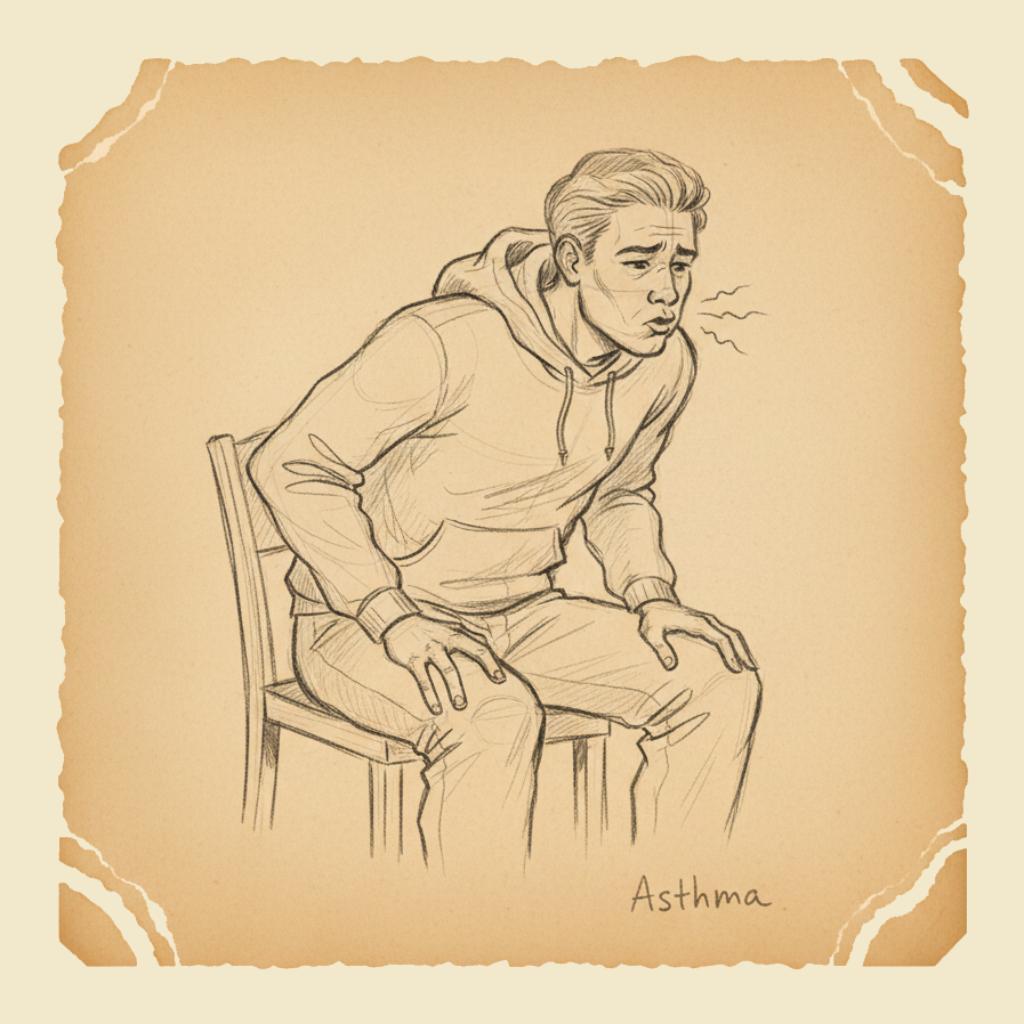
§ short definition
A reversible narrowing of the small airways in the lungs that makes breathing out hard, wheezy and slow.
§ long definition
Asthma is a long-term condition in which the small airways inside the lungs become inflamed and over-reactive. When something triggers them — exercise, cold air, smoke, pollen, an animal, a virus, even strong emotion — the muscle around those airways tightens, the lining swells, and extra mucus is produced. The result is the same picture every time: it gets harder to push air out than to pull it in, breathing becomes noisy and wheezy, and the casualty has to work visibly harder for every breath.
In an asthma attack the casualty often sits upright and leans forward, shoulders raised, talking in short phrases instead of full sentences. You may hear an audible wheeze, a persistent cough, or see the chest and neck muscles being recruited just to breathe. A severe attack is quiet rather than loud — too little air is moving to make a wheeze at all — and is a life-threatening emergency.
First aid is the ANZCOR 4-4-4-4 plan with a blue/grey reliever inhaler (e.g. salbutamol) and a spacer if available: 4 separate puffs, 4 breaths through the spacer after each puff, wait 4 minutes, then repeat the 4 puffs if there is no improvement. Call an ambulance immediately if the attack is severe, if the casualty does not improve after the first 4 puffs, or if you are unsure. Keep giving 4 puffs every 4 minutes until help arrives. Asthma can kill fast — never "wait and see".
§ ANZCOR reference
9.2.5